"The greatest danger for most of us is not that our aim is too high and we miss it, but that it is too low and we reach it." — Michelangelo
That quote resonates differently when you manage a portfolio of $5 million or more and your private banker just told you — again — that the minimum ticket for a compelling private equity opportunity is reserved for institutional clients.
In 2026, a paradox defines the wealth management landscape: the individuals with the most capital to deploy have the least flexible, least transparent, and least responsive investment infrastructure available to them. According to a 2026 Capgemini World Wealth Report, 67% of high-net-worth individuals express dissatisfaction with their primary wealth management provider, citing limited product access, poor communication, and a lack of genuine customization. Meanwhile, global private equity assets under management have surpassed $13 trillion, yet the vast majority of those opportunities remain inaccessible to all but the most connected institutional players.
This is not a minor inconvenience. It is a structural failure — and it is costing sophisticated investors real alpha.
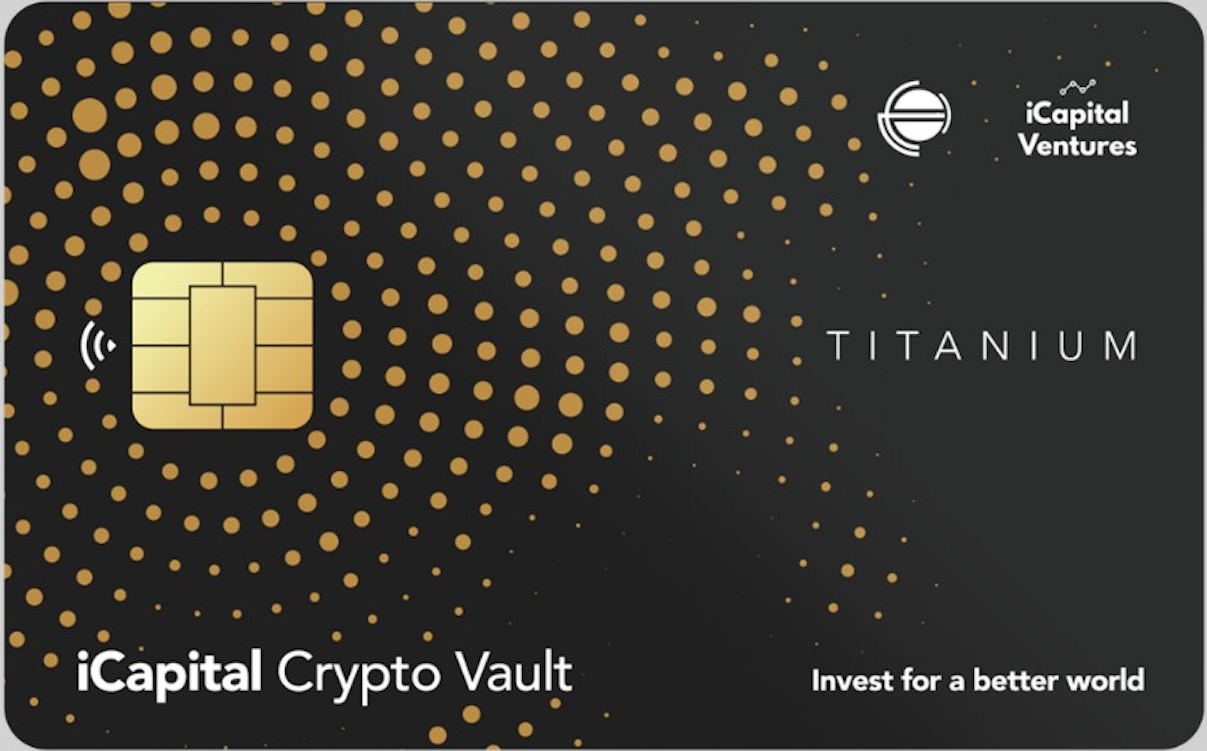
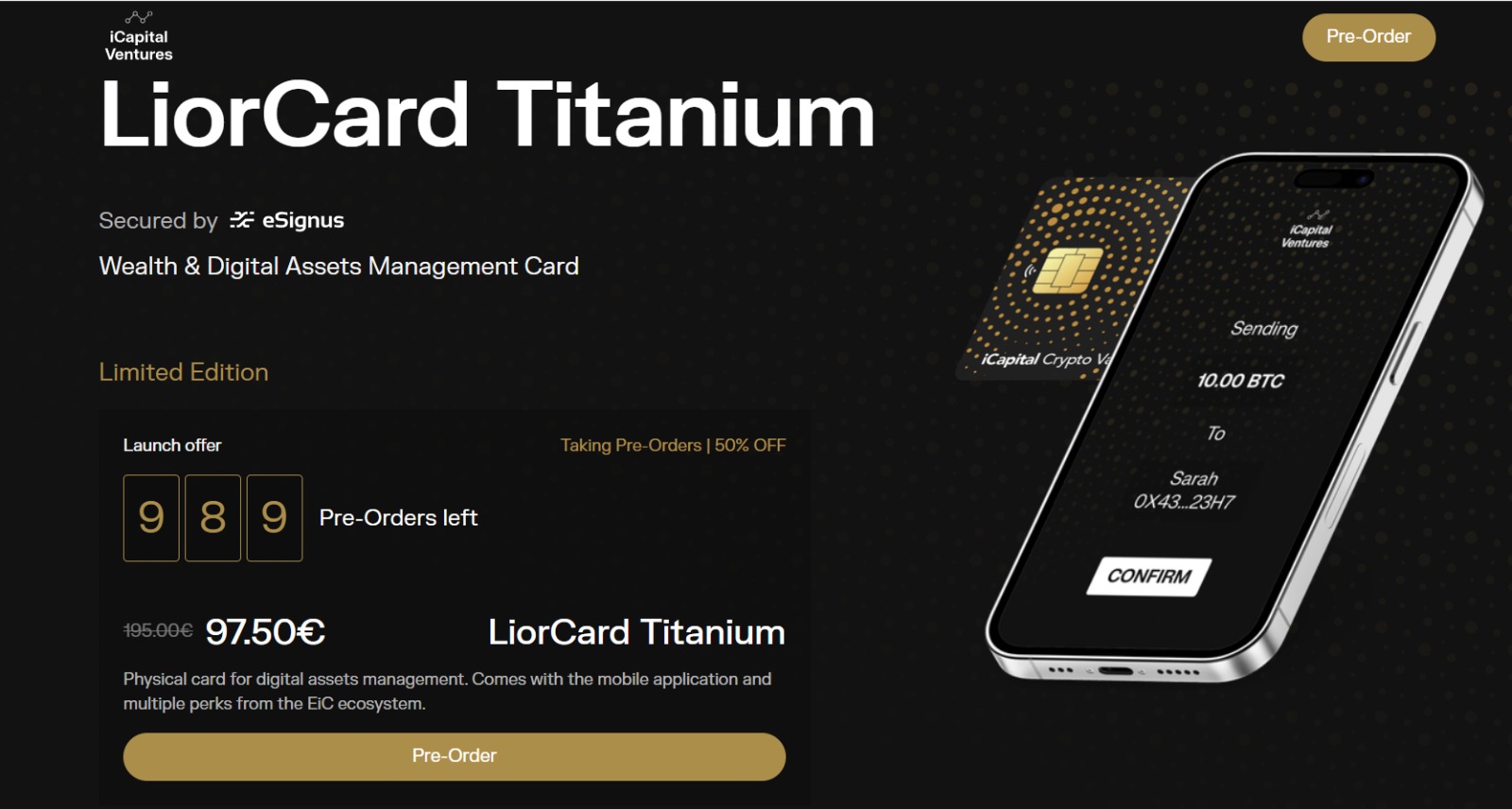
This article examines precisely why traditional investment vehicles are underserving HNWIs in 2026, and how the LiorCard Titanium investment card has been engineered to close that gap.
The Structural Failures of Traditional Wealth Management
The private banking model was designed in an era when information asymmetry was the primary source of value creation for financial institutions. Banks controlled deal flow, clients accepted whatever was presented, and the relationship was inherently unequal. That model is now obsolete — but most institutions haven't updated their infrastructure to reflect it.
For today's HNWI — typically defined as an individual with $1 million or more in investable assets, and often far more — the expectations have fundamentally shifted. These investors are financially literate, globally connected, and increasingly aware of what institutional investors access that they cannot. The frustration is not abstract. It is quantifiable, structural, and growing.
"67% of HNWIs globally are dissatisfied with their primary wealth management provider"
— Capgemini World Wealth Report 2026
Problem #1: The Private Equity Access Gap
Private equity has consistently outperformed public markets over the long term. Cambridge Associates data shows that top-quartile private equity funds have delivered net returns of 15–20% annually over 20-year periods — a spread of 400 to 700 basis points over comparable public equity benchmarks.
Yet for most HNWIs, accessing these opportunities requires navigating a labyrinth of institutional gatekeeping. The typical minimum commitment for a blue-chip private equity fund sits between $5 million and $25 million. Even secondary market platforms — which have proliferated to democratize access — impose minimum tickets of $250,000 to $500,000 with limited transparency into underlying deal quality.
Club deals — direct co-investments alongside a sponsor into a single company or asset — represent perhaps the most attractive structure for sophisticated individual investors. They offer lower fees, higher transparency, and greater control than blind-pool fund commitments. But access to quality club deals is almost entirely relationship-dependent. Without a seat at the right table — a top-tier family office network, a bulge-bracket private bank's deal desk, or a direct relationship with a GP — these opportunities simply do not appear in your inbox.
"Private markets belong in every advisor's toolkit and represent a critical gap for individual investors"
— InvestmentNews
As InvestmentNews noted in early 2026, private markets "belong in every advisor's toolkit" — yet the infrastructure to actually deliver that access to individual clients remains fragmented and inconsistent. Stanford GSB's April 2026 explainer on private equity underscored the same structural reality: the asset class is designed around institutional capital, with individual investor access treated as an afterthought.
📊 $13+ trillion in 2026 - Private Equity AUM Global
Problem #2: No Governance Participation — You're a Passive Bystander
In traditional wealth management structures — whether a discretionary mandate at a private bank, a fund-of-funds allocation, or even a direct fund investment — the individual investor is, by design, a passive capital provider. You commit capital. You receive quarterly reports. You have no meaningful input into portfolio construction, no seat at advisory committees, and no mechanism to influence outcomes.
This passivity is not merely frustrating for investors who are accustomed to running businesses or managing complex organizations. It is also financially suboptimal. Research consistently demonstrates that investors with governance rights — including advisory board seats, co-investment approval rights, and information covenants — achieve materially better risk-adjusted returns because they can identify problems earlier and apply operational expertise directly.
The irony is stark: the very individuals who built the wealth being managed are excluded from meaningful participation in how it is deployed. A founder who built a $200 million business and understands operational leverage, capital structure, and market dynamics is handed a PDF report and told to be patient.
📊 Generate 15-20% better risk-adjusted outcomes - Investors with governance participation rights
Problem #3: Service Standards That Don't Match Your Tier
The third failure is perhaps the most personally felt: the chronic gap between the service promises of private banking and the operational reality.
Relationship managers at major private banks typically manage between 80 and 150 client relationships simultaneously. The math is straightforward — that leaves approximately 2 to 3 hours of genuine attention per client per year. Calls go unreturned for days. Bespoke requests are routed through compliance layers that take weeks. Time-sensitive opportunities — the ones that actually move the needle — are offered to institutional clients first, with individual HNWIs receiving access only after the most attractive terms have been allocated.
According to a 2026 EY Global Wealth Management Report, 58% of HNWIs with assets between $1M and $10M feel they receive "standardized rather than personalized" service from their primary wealth manager. The figure rises to 72% among those who have switched providers in the last 24 months — a cohort that is growing rapidly.
"58% of HNWIs feel they receive standardized rather than personalized service"
— EY Global Wealth Management Report 2026
This is not a relationship problem. It is a structural one. Legacy institutions are not architected to deliver genuinely bespoke service at scale. Their technology, their staffing models, and their compliance frameworks were built for a different era.
The LiorCard Titanium Solution
The LiorCard Titanium investment card was not designed to compete with traditional private banking on its own terms. It was designed to replace the structural failures that define it.
Built specifically for HNWIs who require institutional-grade deal access, genuine governance participation, and service infrastructure that matches their sophistication, LiorCard Titanium represents a fundamentally different architecture for wealth deployment. It is not a product layered onto an existing system. It is a new system.
Solution #1: Direct Private Equity Access — No Intermediary Required
LiorCard Titanium cardholders gain direct access to a curated pipeline of private equity opportunities — spanning growth equity, buyout, real assets, and digital infrastructure — without the gatekeeping layers that define traditional access models.
This means no blind-pool commitments to opaque fund structures. No waiting for a relationship manager to "check with the desk." No minimum tickets calibrated to exclude anyone below institutional scale. Opportunities are presented with full transparency: deal thesis, financial projections, management team profiles, risk factors, and exit scenarios — the same information package that institutional LPs receive.
The platform's deal sourcing infrastructure spans multiple geographies and sectors, with a particular focus on high-conviction opportunities in technology, healthcare, and real assets — the three sectors where private equity has historically generated the most durable alpha relative to public market equivalents.
📊 400-700 bps annually over 20-year periods - Private Equity Outperformance vs. Public Markets
Solution #2: Exclusive Club Deals and Co-Investment Structures
Club deals represent the most efficient structure for sophisticated individual investors — lower fees, higher transparency, direct asset exposure. LiorCard Titanium cardholders receive priority access to a proprietary network of club deal opportunities, structured as co-investments alongside established sponsors and operators.
These are not repackaged retail products. They are genuine co-investment structures with:
- Direct ownership stakes in operating companies and assets
- Aligned fee structures — no management fees on co-investments, performance fees only on realized gains
- Full information rights — quarterly operational updates, audited financials, and direct access to management
- Defined exit timelines — typically 3 to 7 years, with secondary liquidity options available through the LiorCard network
As Breaking AC reported in March 2026, alternative investments are fundamentally changing wealth strategies for HNWIs — with club deals and direct co-investments emerging as the preferred vehicle for investors who understand the limitations of traditional fund structures.
"Alternative investments are changing wealth strategies for high-net-worth individuals"
— Breaking AC
Solution #3: Governance Participation — Real Decision-Making Power
This is where LiorCard Titanium diverges most sharply from every other investment vehicle available to individual investors.
Cardholders at the Titanium tier are not passive capital providers. They are active participants in the governance of their investments. Depending on commitment size and deal structure, this includes:
- Advisory board representation on portfolio companies
- Co-investment approval rights on follow-on rounds
- Operational consultation access — direct engagement with management teams on strategic initiatives
- Voting rights on material corporate decisions within club deal structures
- Real-time information covenants — not quarterly PDFs, but live data access to key operational metrics
This is governance participation as it exists in institutional private equity — extended, for the first time at scale, to individual HNWIs through a purpose-built digital infrastructure.
The implications are significant. Investors who understand a sector can apply that expertise directly. A former healthcare executive who invests in a healthcare technology club deal through LiorCard Titanium is not a passive bystander — they are a genuine value-add participant, with the rights and access to prove it.
Solution #4: Premium Concierge Investment Services
LiorCard Titanium's concierge infrastructure is built around a simple principle: your time is your scarcest resource, and every interaction with your investment platform should reflect that.
Each Titanium cardholder is assigned a dedicated investment concierge — not a relationship manager with 120 other clients, but a dedicated specialist with deep expertise in alternative investments and a mandate to serve a small number of relationships with genuine depth.
Concierge services include:
- 24/7 direct access — phone, secure messaging, and video — with guaranteed response times measured in minutes, not days
- Bespoke deal sourcing based on individual investment criteria, sector expertise, and return objectives
- Tax and structuring advisory coordinated with the cardholder's existing advisors
- Secondary liquidity facilitation — access to LiorCard's proprietary secondary market for early exit options
- Global network introductions — access to LiorCard's network of founders, operators, and institutional co-investors
This is not a call center with a premium label. It is a genuine high-touch service infrastructure designed for investors who expect — and deserve — institutional-grade support.
Traditional Banking vs. LiorCard Titanium: A Direct Comparison
| Dimension | Traditional Private Banking | LiorCard Titanium |
| Private Equity Access | Fund-of-funds, limited direct | Direct deal access, full transparency |
| Club Deal Access | Relationship-dependent, inconsistent | Proprietary pipeline, priority allocation |
| Minimum Ticket | $250K–$25M depending on structure | Calibrated to individual profile |
| Governance Rights | None (passive LP) | Advisory board, voting rights, info covenants |
| Service Model | 80–150 clients per RM | Dedicated concierge, small book |
| Response Time | Days to weeks | Minutes to hours, 24/7 |
| Fee Structure | 1-2% management + performance | Aligned, performance-oriented |
| Transparency | Quarterly PDF reports | Real-time operational data access |
| Digital Asset Exposure | Limited, compliance-constrained | Integrated digital infrastructure |
| Secondary Liquidity | Illiquid until fund exit | Proprietary secondary market access |
Key Statistics
📊 $13 trillion+ — Global private equity AUM in 2026, with the majority inaccessible to individual investors (Source: Preqin 2026)
💡 67% of HNWIs are dissatisfied with their primary wealth management provider (Source: Capgemini World Wealth Report 2026)
📈 400–700 bps — Annual outperformance of top-quartile private equity vs. public equity benchmarks over 20-year periods (Source: Cambridge Associates 2026)
⚠️ 58% of HNWIs feel they receive standardized rather than personalized service from their wealth manager (Source: EY Global Wealth Management Report 2026)
FAQ
How do HNWIs access private equity in 2026?
In 2026, HNWIs have several theoretical pathways to private equity: traditional fund commitments through private banks or family offices, secondary market platforms, and direct co-investments. In practice, the most attractive opportunities — top-quartile funds, proprietary club deals, and direct co-investments with experienced sponsors — remain largely inaccessible without institutional relationships or a purpose-built access vehicle like LiorCard Titanium. The card provides a structured, curated pathway to these opportunities without the gatekeeping that defines legacy channels.
What is a club deal and why does it matter for high-net-worth investors?
A club deal is a direct co-investment by a group of investors alongside a lead sponsor into a single company or asset. For HNWIs, club deals offer three critical advantages over traditional fund structures: lower fees (no management fee, performance fee only on realized gains), greater transparency (full information rights on a specific asset rather than a blind pool), and higher concentration in high-conviction opportunities. LiorCard Titanium provides priority access to a proprietary network of club deal opportunities structured specifically for sophisticated individual investors.
What makes LiorCard Titanium different from a traditional private banking mandate?
The fundamental difference is structural, not cosmetic. A traditional private banking mandate is a discretionary or advisory relationship built on a legacy infrastructure designed for institutional clients — with individual HNWIs as a secondary consideration. LiorCard Titanium is purpose-built for the HNWI: direct deal access without intermediary layers, genuine governance participation rights, a dedicated concierge model with a small client book, and real-time transparency into portfolio companies. It is not a premium label on a standard product — it is a different architecture entirely.
What governance rights do LiorCard Titanium cardholders receive?
Governance rights vary by deal structure and commitment level, but Titanium cardholders can access advisory board representation on portfolio companies, co-investment approval rights on follow-on rounds, direct engagement with management teams, voting rights on material corporate decisions in club deal structures, and real-time operational data access. These are the same governance rights that institutional LPs negotiate in traditional private equity — now available to sophisticated individual investors through LiorCard's platform.
Is LiorCard Titanium suitable for investors focused on digital assets?
Yes. LiorCard Titanium's investment pipeline includes digital infrastructure, blockchain-native businesses, and tokenized real-world assets alongside traditional private equity categories. The platform's digital asset investment card functionality is designed to bridge traditional alternative investments with the emerging digital asset economy — giving cardholders exposure to both established private equity structures and next-generation digital investment vehicles within a single, coherent framework.
The frustration that sophisticated investors feel with traditional wealth management in 2026 is not irrational — it is a rational response to a system that was never designed to serve them well. Private equity's structural barriers, the absence of meaningful governance participation, and service standards that don't reflect the complexity of significant wealth are not bugs in the traditional model. They are features — features that protect institutional incumbents at the expense of individual investors.
LiorCard Titanium was built on the premise that investors with the capital, the expertise, and the sophistication to participate in institutional-grade opportunities deserve the infrastructure to actually do so. Not a repackaged fund-of-funds. Not a discretionary mandate with a premium label. A purpose-built investment vehicle that delivers direct private equity access, exclusive club deal structures, genuine governance participation, and concierge service that reflects the value of your time.
The new standard for HNWI investing is not a better version of what came before. It is something structurally different.
A select group of investors have already made the transition. The question is whether you are positioned to join them.
→ Apply for LiorCard Titanium and request access to the next available cohort. Allocation is limited and reviewed on an individual basis.













































































Share
00 Comments
No Comments found!