Investor Mindset and Psychology: The Invisible Advantage of Performance
In today's financial markets, information flows in real time, quantitative models are becoming more refined, and technological tools are increasingly sophisticated. Yet despite these constant developments, one factor remains crucial to long-term success: investor psychology.
In an environment marked by geopolitical uncertainty, structural volatility, and accelerating economic cycles, performance no longer depends solely on the quality of financial analysis. It relies on mental mastery, behavioral discipline, and consistent decision-making.
Modern finance is no longer just about numbers. It has become a matter of inner balance.
Psychology: the hidden lever of performance
Research in behavioral finance has shown that cognitive and emotional biases strongly influence investment decisions. Even experienced investors are not immune to:
• Confirmation bias
• Overconfidence
• Loss aversion
• Herding behavior
• Impulsive reactions to volatility
These mechanisms are not due to a lack of technical competence. They are inherent in human nature. The difference between a successful investor and a vulnerable investor lies in the ability to recognize these biases and manage them.
Volatility reveals emotions.
Discipline reveals leadership.
Understanding the psychology of risk
Risk is not just a statistical figure measured by volatility or standard deviation. It is also perceived, interpreted, and felt.
Two investors exposed to the same market situation may react in radically different ways. Why?
Because the perception of risk is psychological before it is mathematical.
Fear can cause hasty sales at the worst possible moment.
Euphoria can lead to excessive risk-taking.
Social pressure can encourage herd behavior rather than independent analysis.
Controlling risk therefore means controlling your reaction to risk.
Behavioral discipline and market cycles
Economic cycles are inevitable. Market corrections are not anomalies, but natural components of financial dynamics.
However, it is precisely during these periods of tension that behavioral errors multiply:
• Exiting the market after a significant decline
• Changing a long-term strategy under the influence of short-term emotions
• Overreacting to news or media hype
Experienced investors take a different approach. They rely on:
• Structured investment plans
• Clear allocation rules
• Predefined rebalancing mechanisms
• A long-term vision aligned with their strategic objectives
Consistency takes precedence over impulse.
Mental strength as a strategic advantage
In a complex financial world, mental strength becomes a strategic asset.
It is based on:
1. Self-awareness – Identifying your emotional triggers
2. The ability to take a step back – Separating facts from interpretations
3. Discipline – Adhering to an established decision-making framework
4. Resilience – Staying the course in turbulent times
5. Continuous learning – Adjusting without giving in to panic
Sustainable performance is the result of inner stability in the face of external instability.
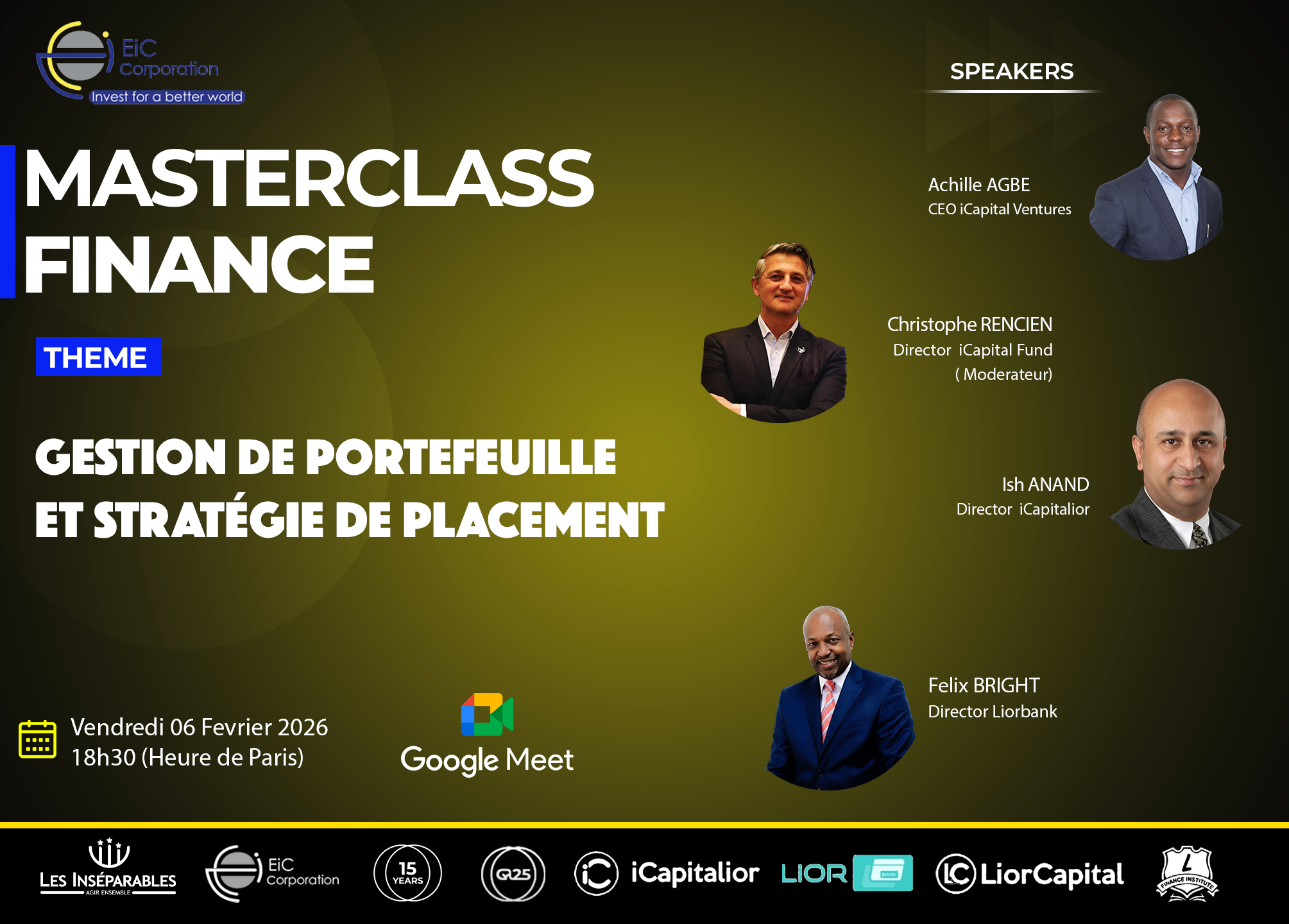
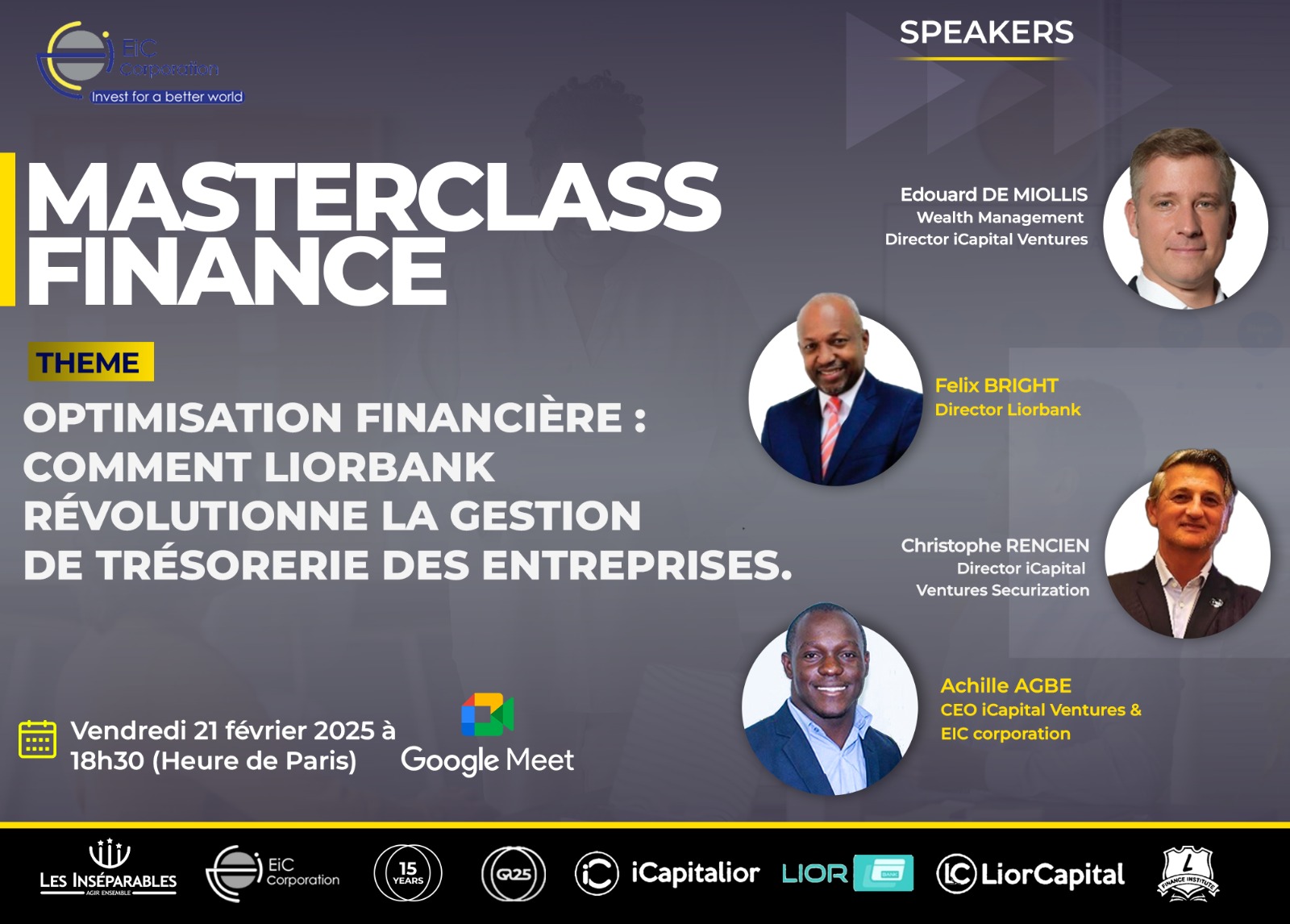
Why this Masterclass is essential
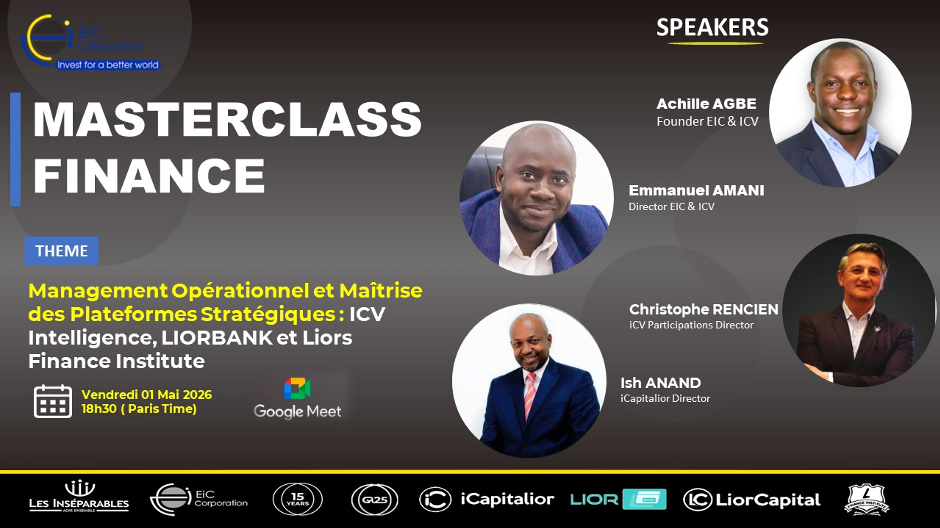
The Finance Masterclass on Investor Mindset and Psychology aims to provide an in-depth understanding of the invisible mechanisms that influence performance.
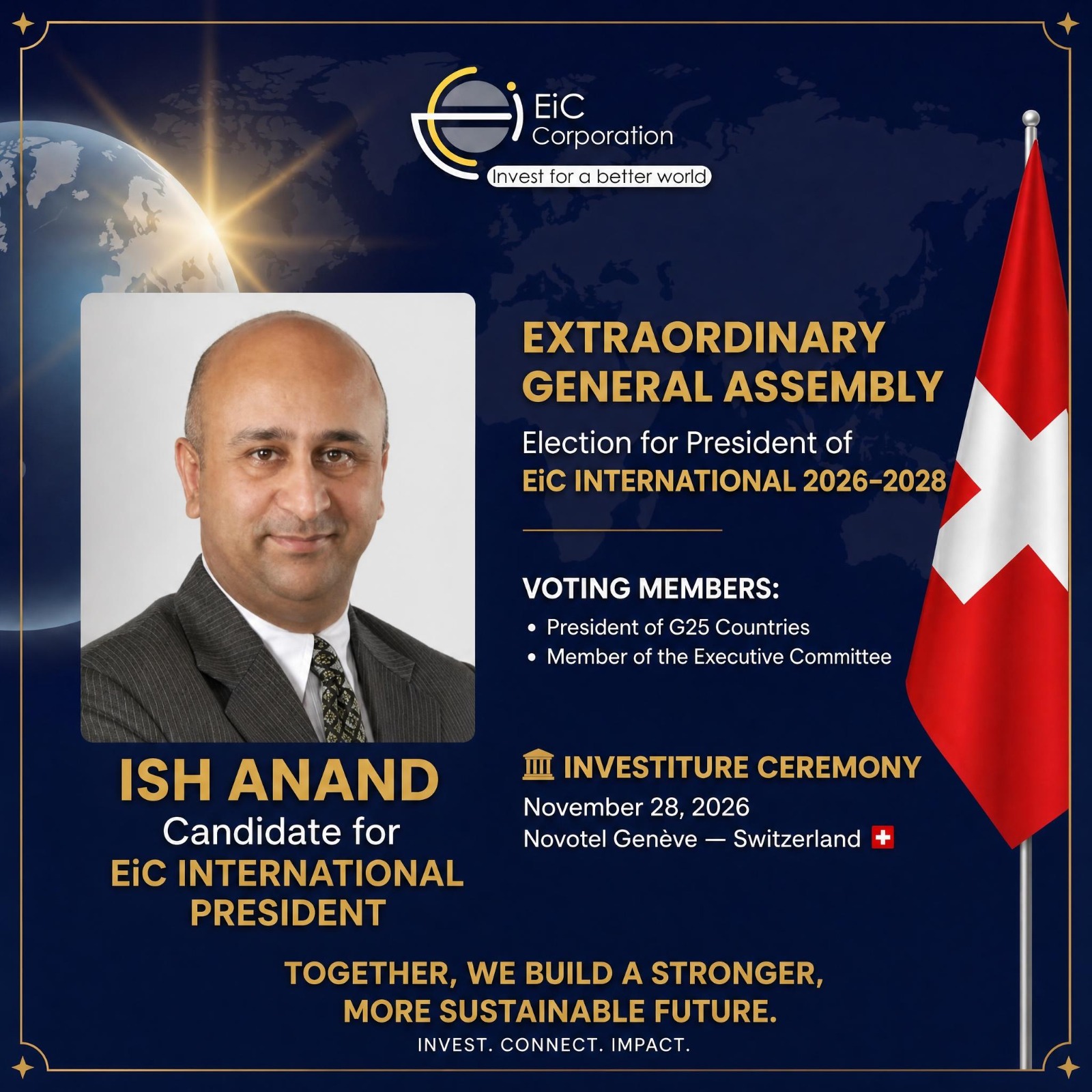
Led by international leaders and experts Agbe Achille, Amani Emmanuel, Christophe Rencien, and Ish Anand this session will address:
• Cognitive biases and their real impact on portfolios
• Emotional mechanisms in extreme market phases
• Concrete tools for strengthening behavioral discipline
• Strategies for maintaining consistent decision-making over the long term
It's not just about learning how to invest.
It's about learning how to make decisions under pressure.
Volatility is part of the journey.
Mindset defines the trajectory.
In modern markets, competitive advantage no longer lies solely in information, but in the ability to remain clear-headed when others lose their composure.
Investors who master their psychology master their performance.
And those who master their performance build their financial future with consistency and sustainability.












































































Share
00 Comments
No Comments found!