You started your business with a vision. Maybe you have a great product, a solid service, or a bold idea. But somewhere between that first client and your tenth, things start to feel… chaotic. Emails get missed. Tasks fall through the cracks. You find yourself doing the same thing over and over — differently each time.
Sound familiar? That's what happens when a business runs without processes.
The good news: you don't need to be a large corporation to build efficient systems. Processes are not a luxury reserved for multinationals. They are the foundation every serious business needs — from day one.
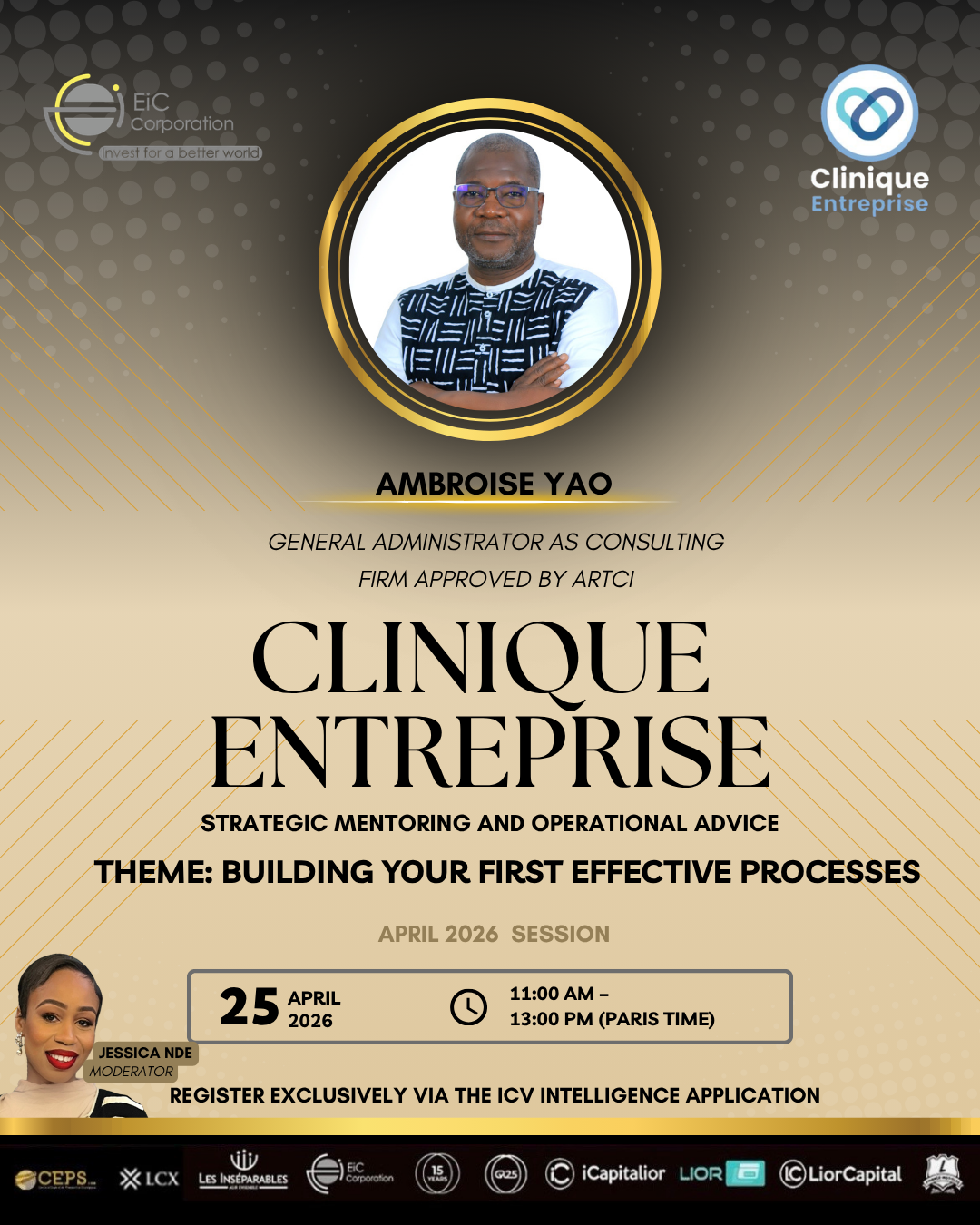
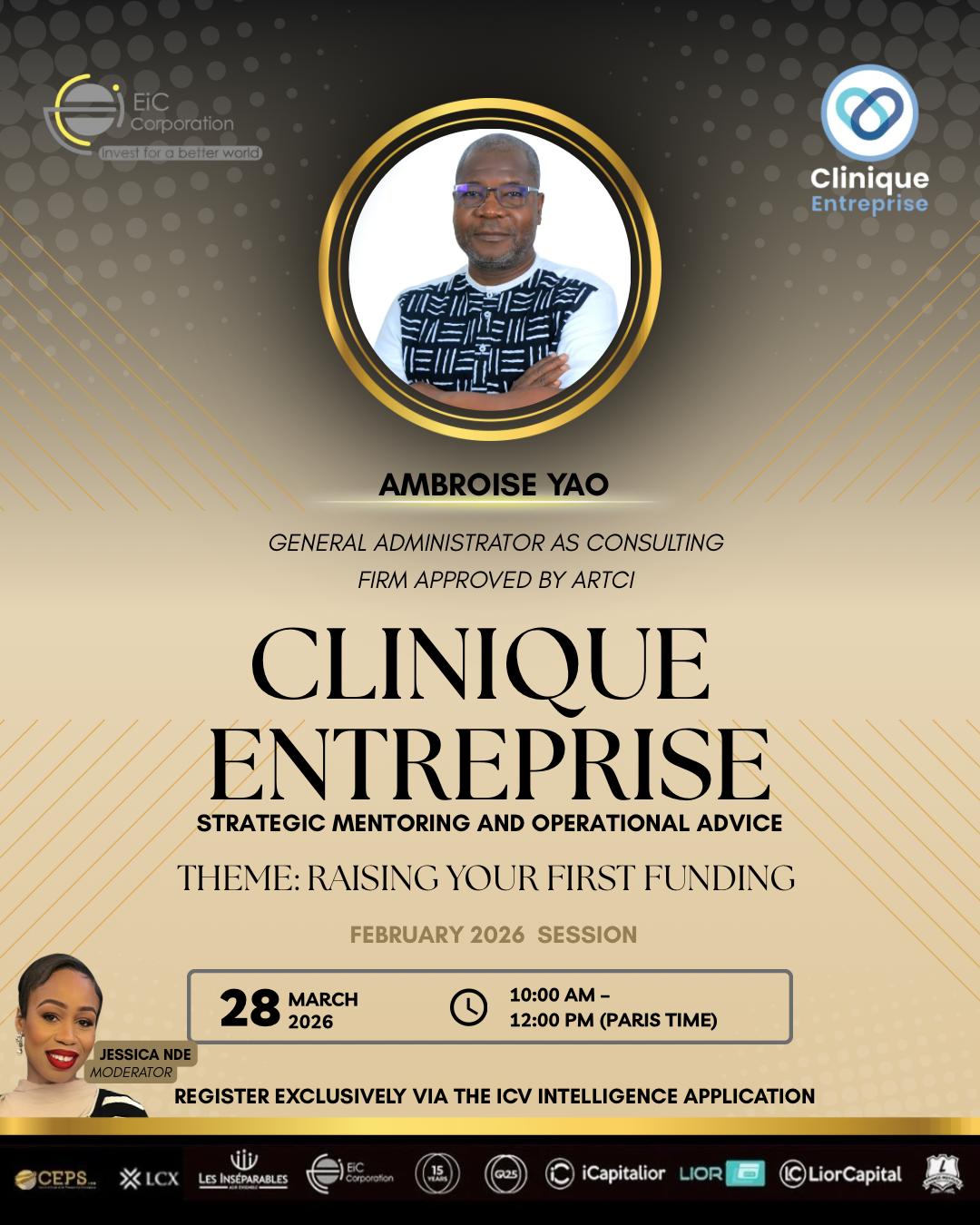
On Saturday, April 25, 2026, from 11:00 AM to 1:00 PM (Paris time), ICV Intelligence is hosting a live session dedicated to exactly this topic: "Building Your First Effective Processes." Led by Ambroise Yao, General Administrator of an ARTCI-certified consulting firm, and moderated by Jessica Nde, this session is designed for entrepreneurs, business leaders, and project holders who are ready to stop improvising and start building.
Table of Contents
Why Processes Are the Backbone of Every Business
Many entrepreneurs believe processes are something they'll "deal with later" — once the business grows. But waiting is exactly what holds growth back.
A process is simply a documented, repeatable way of doing something. It can be as simple as how you respond to a new client inquiry, how you issue an invoice, or how you onboard a new team member. When these actions are defined and consistent, everything runs more smoothly.
Here's why this matters from the very start:
- Consistency builds trust. When clients receive the same quality experience every time, they come back — and they refer others.
- Processes free up your time. When your team knows what to do and how to do it, you stop being the bottleneck.
- Scaling becomes possible. You can't grow what you haven't documented. Processes are the blueprint for expansion.
- Mistakes decrease significantly. Structured workflows reduce human error and the costly rework that comes with it.
- "Growing a small business starts with building systems that support consistent progress." — Thryv Business Growth Report, 2026
- The global Business Process Management (BPM) market was valued at $18.1 billion in 2025 and is projected to nearly double to $40.9 billion by 2035 — a clear signal that the world's most competitive organizations are betting heavily on structured operations.
- 📊 $18.1 billion in 2025 → $40.9 billion by 2035 - Global BPM Market Value
The 3 Most Common Mistakes Entrepreneurs Make
Before you can build the right processes, it helps to understand what's going wrong in most early-stage businesses.
1. Doing Everything From Memory
When you're the founder, you carry the entire operation in your head. You know the passwords, the client preferences, the supplier contacts, the pricing rules. This creates a single point of failure — you. The moment you're unavailable, everything slows down or stops.
The fix: Start documenting. Even a simple checklist for a recurring task is a process. It doesn't have to be perfect — it just has to exist.
2. Treating Every Situation as Unique
Without a process, every client request, every complaint, every new project starts from scratch. This wastes enormous time and energy.
The fix: Identify your most frequent tasks and create a standard way of handling them. This is the essence of a Standard Operating Procedure (SOP).
3. Waiting Until You're "Big Enough"
This is the most costly mistake. Many entrepreneurs say: "We'll put processes in place when we hire more people." But by then, bad habits are already baked in — and undoing them is far harder than building right from the start.
The fix: Build lean, simple processes today. You can always refine them as you grow.
How to Build Your First Processes: A Practical Framework
You don't need expensive software or a dedicated operations team to get started. Here's a simple, actionable framework any entrepreneur can apply immediately.
Step 1 — Identify Your Core Activities
List the 5 to 10 tasks that happen most frequently in your business. Think about: client onboarding, quote generation, order fulfillment, customer follow-up, financial reporting. These are your process priorities.
Step 2 — Document the Steps
For each activity, write down every step required to complete it — from start to finish. Use simple language. Bullet points work perfectly. The goal is that someone else could follow your instructions without asking you a single question.
Step 3 — Assign Ownership
Every process needs an owner — someone responsible for executing it and keeping it up to date. Even if you're a solo entrepreneur, naming yourself as the owner of each process creates accountability.
Step 4 — Test and Refine
Run the process, observe what works and what doesn't, and adjust. Processes are living documents. They should evolve as your business evolves.
Step 5 — Automate Where Possible
Once a process is stable and documented, look for opportunities to automate it — whether through a simple email template, a scheduling tool, or a workflow app. Automation multiplies the efficiency gains you've already created.
| Phase | Action | Tools to Consider |
| Identify | List recurring tasks | Pen & paper, spreadsheet |
| Document | Write step-by-step instructions | Google Docs, Notion |
| Assign | Name a process owner | Team meeting, task manager |
| Test | Run the process, gather feedback | Observation, team input |
| Automate | Reduce manual effort | Zapier, Trello, CRM tools |
📊 50% less time spent on recurring tasks - Businesses with documented processes
What You'll Learn at the ICV Intelligence Session
This is exactly the kind of practical, hands-on guidance you'll get at the upcoming ICV Intelligence live session on April 25, 2026.
Ambroise Yao, General Administrator of an ARTCI-certified consulting firm, brings deep expertise in business structuring and operational strategy. His approach is grounded in real-world experience — not theory — making this session immediately applicable to your business, no matter your industry or stage.
Here's what you can expect from the 2-hour session:
- ✅ Understand what a business process really is — and what it isn't
- ✅ Learn how to identify the processes your business needs right now
- ✅ Discover practical tools and methods to document your operations
- ✅ Get a roadmap for building a business that runs without you
- ✅ Ask your questions live and get expert answers in real time
Whether you're just launching your project, running a growing SME, or leading an established organization that needs better structure — this session will give you a clear, actionable starting point.
Moderated by Jessica Nde, the session promises to be both structured and engaging, with time for Q&A and interactive discussion.
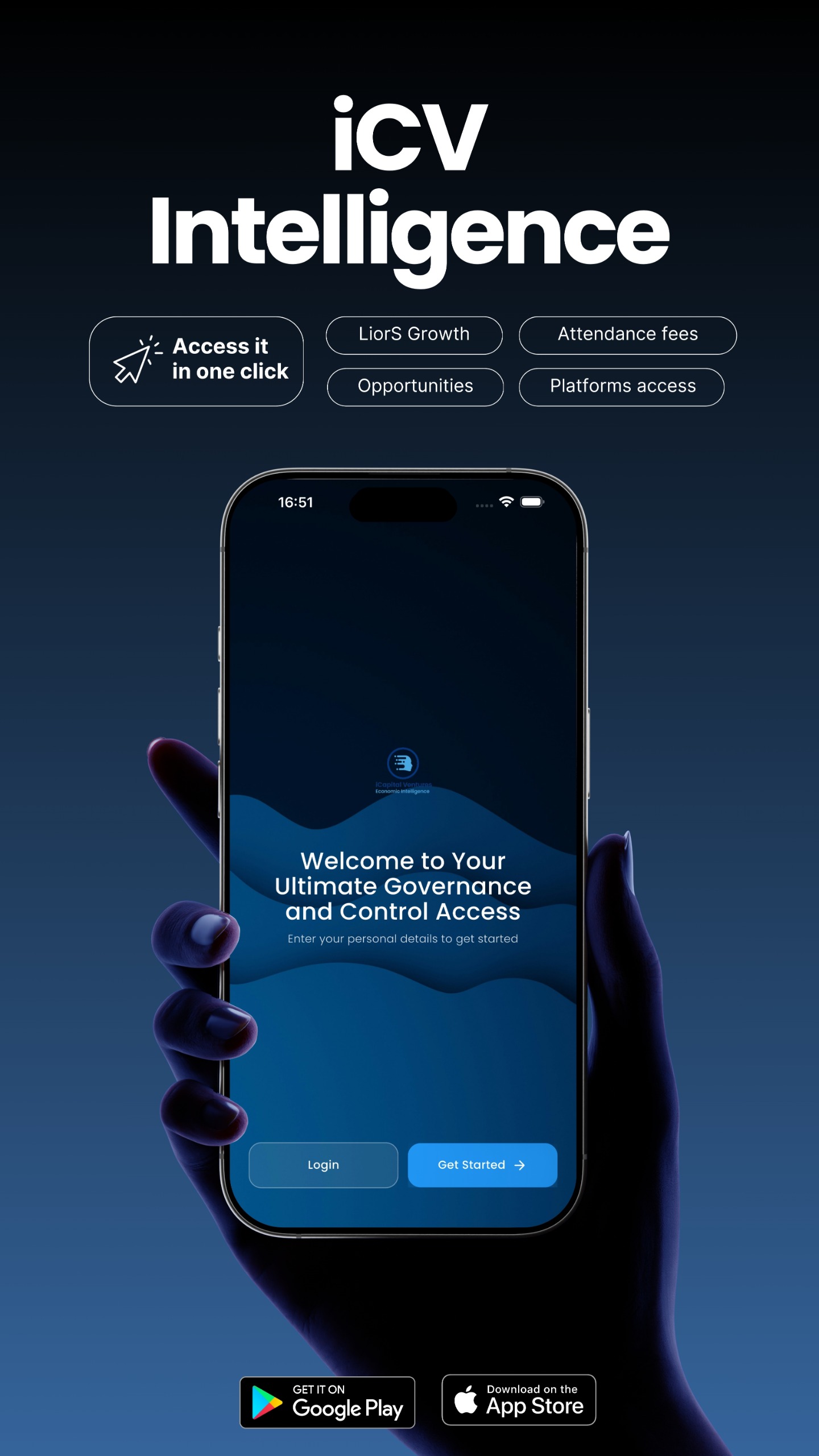
📲 Register Now — Exclusively via ICV Intelligence
Registration is exclusively available through the ICV Intelligence platform. Choose the option that works best for you:
- Chiffres Clés
- 📊 $18.1 billion — the value of the global Business Process Management market in 2025, projected to reach $40.9 billion by 2035 (Source: Research Nester)
- 💡 Only 15% of organizations have reached advanced BPM maturity — meaning the vast majority are still operating below their potential (Source: BOC Group, 2026)
- ⚙️ Standard Operating Procedures (SOPs) reduce onboarding time and training costs significantly — new team members learn from documents, not from constantly asking their manager (Source: Glyde SOP Guide, 2026)
- 📈 Startups that build repeatable systems early create compounding returns over time — each process improvement multiplies across every future hire and every new client (Source: ASU Entrepreneurship Blog, 2026)
The difference between a business that thrives and one that constantly struggles often comes down to one thing: structure. Processes are not bureaucracy. They are not reserved for large corporations with dedicated operations teams. They are the invisible engine that keeps any business — big or small — running reliably and efficiently.
Starting early means building better habits, attracting better clients, and creating a team that can operate without constant supervision. It means your business works for you — not the other way around.
If you're ready to take that step, the ICV Intelligence live session on April 25, 2026 is your opportunity to learn directly from an expert who has helped organizations build exactly these kinds of foundations.
Register today via the ICV Intelligence app and take the first step toward a business that truly runs.






























































































Share
00 Comments
No Comments found!