March 2026 — Digital Markets. In a macroeconomic environment shaped by heightened geopolitical tensions — Iran, Israel, and the United States — and sweeping volatility across digital assets, a major strategic divergence is emerging between two emblematic assets: Bitcoin, the historical market leader, and LiorS (LIORS), a next-generation structured token. Far from being a simple performance comparison, this divergence reveals two fundamentally different valuation philosophies — and perhaps, two distinct futures for the crypto asset class.
A Volatile Macro Context: Setting the Stage
March 2026 has proven to be a stress test for digital assets. Escalating geopolitical tensions across the Middle East — particularly involving Iran, Israel, and the United States — have injected significant uncertainty into global financial markets. Risk-off sentiment has rippled across equities, commodities, and crypto alike, triggering sharp capital rotations and forcing investors to reassess their portfolio allocations.
In this environment, the behavior of individual crypto assets reveals far more than any bull-market rally could. How an asset performs under pressure is the ultimate measure of its structural integrity. And it is precisely under this lens that the divergence between Bitcoin and LiorS becomes most illuminating.
📊 60% increase in volatility during geopolitical shocks - Geopolitical risk impact on crypto markets
LiorS: Controlled Performance Under Systemic Stress
Between March 21 and March 28, 2026, LiorS (LIORS) recorded a moderate correction of approximately -4.4% — a figure that, on the surface, might appear unremarkable. But the context makes it extraordinary.
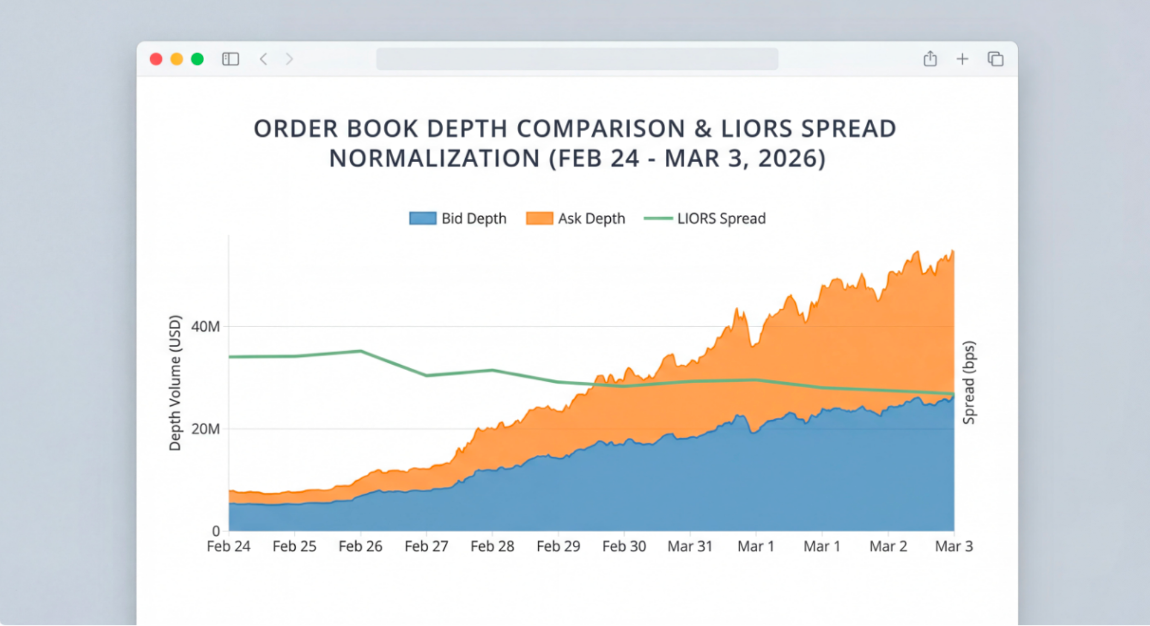
During the same period, the token's liquidity surged by a staggering +974%. In traditional market logic, a near-1,000% expansion in liquidity without a corresponding price collapse would be considered anomalous. Yet LiorS held its ground. This apparent paradox actually reveals a deeply healthy underlying dynamic:
- Absence of panic selling: Holders did not capitulate despite external shocks
- Controlled profit-taking: Exits were orderly, not chaotic
- Structural price resilience: The token absorbed massive liquidity expansion without erratic swings
Volatility remained contained and organized — a hallmark of a market entering a maturation and balanced redistribution phase, not a speculative bubble.
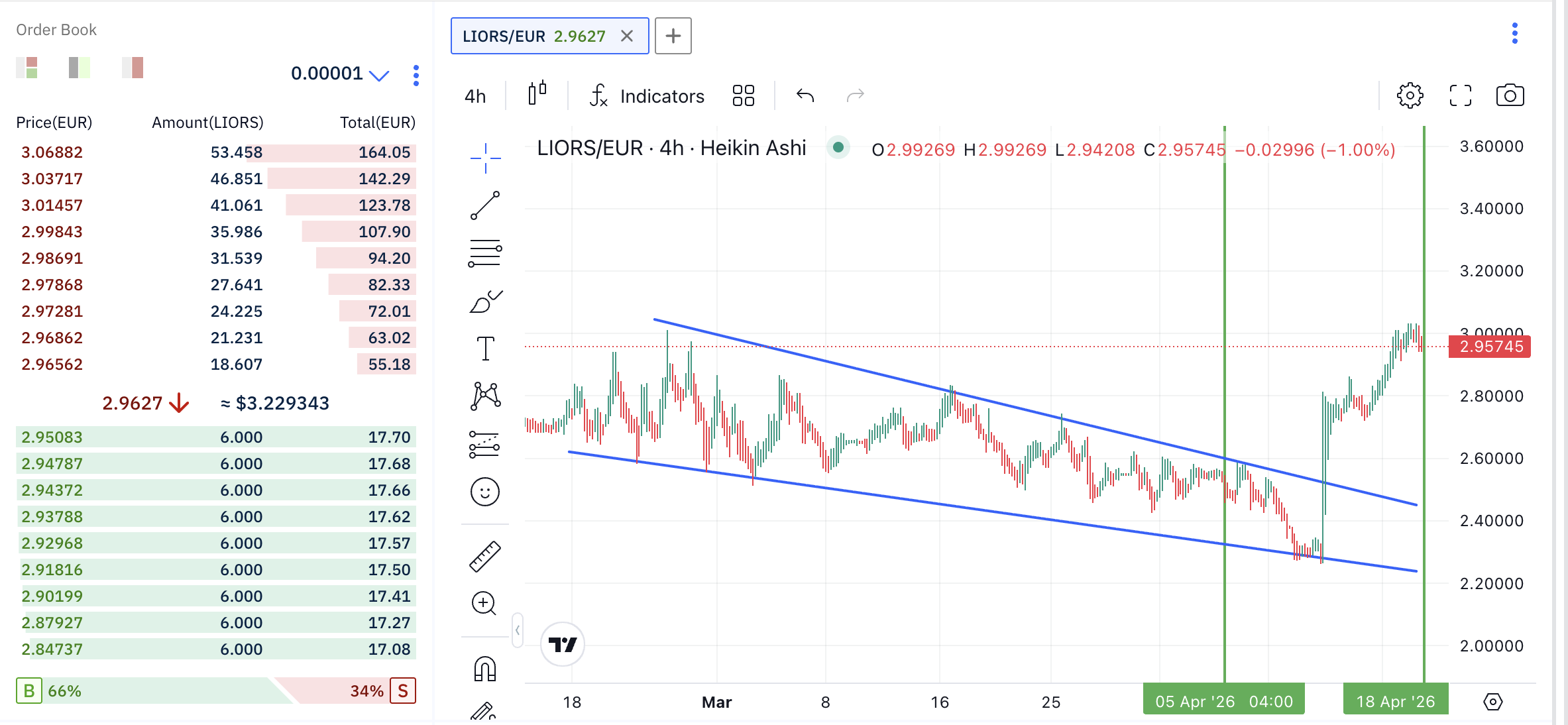
Perhaps the most telling indicator: the order book ratio shifted to bid/ask = 1.00, signaling a transition from a directional market (dominated by buyers or sellers) to an efficient, balanced market. This is the kind of structural signal that institutional-grade analysts look for — and rarely find in early-stage crypto assets.
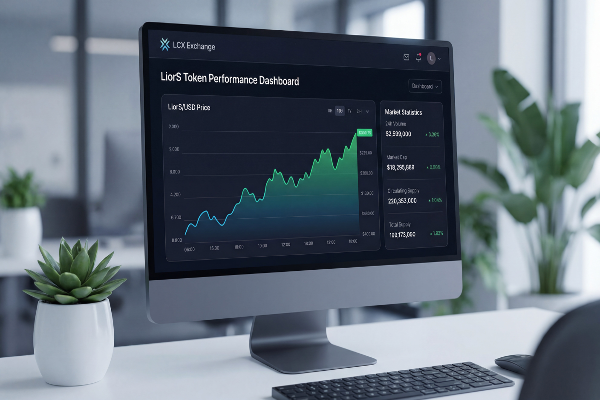
📊 +974% liquidity expansion with only -4.4% price correction - LiorS liquidity surge March 21–28 2026
"A bid/ask ratio of 1.00 is a classical indicator of market efficiency, typically observed in mature financial instruments"
— Market Microstructure Theory
A Unique Hybrid Financial Architecture
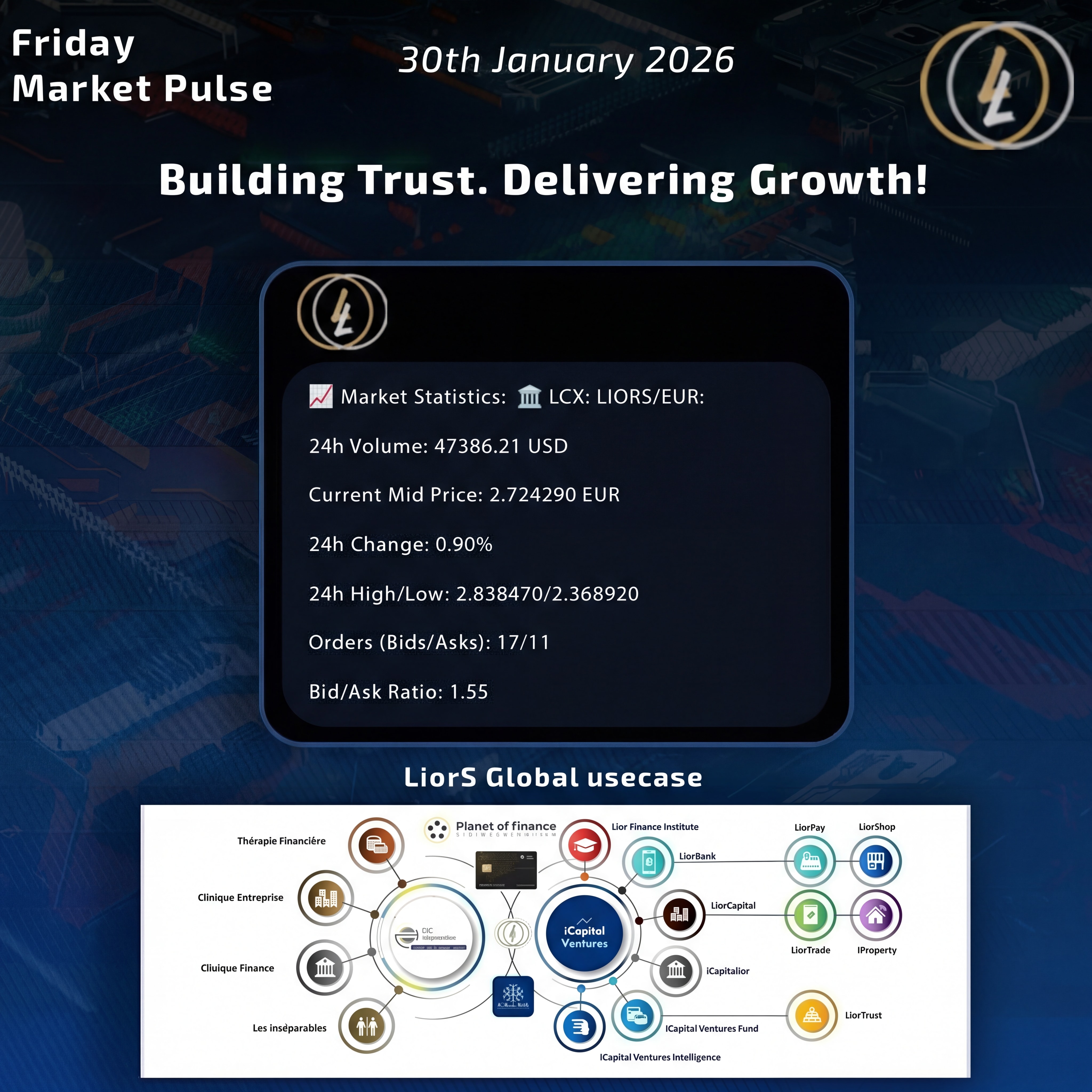
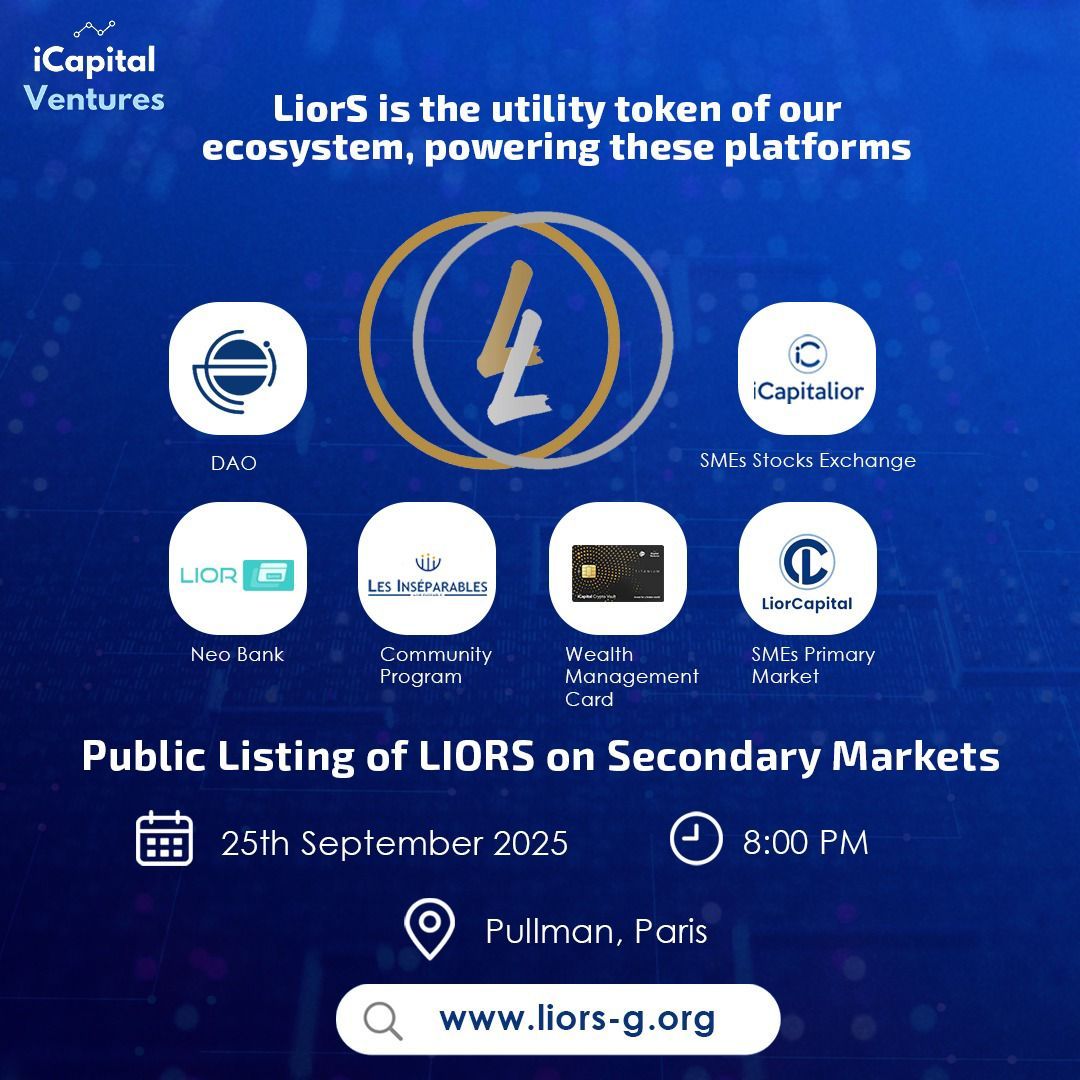
What sets LiorS apart from the vast majority of crypto assets is not simply its market behavior — it is its foundational architecture. Unlike traditional crypto-assets that derive value almost exclusively from speculative demand, LiorS is engineered as a multi-functional financial instrument.
Its utility stack includes four distinct layers:
| Function | Description | Parallel in Traditional Finance |
| Payment Instrument | Usable for transactions within the ecosystem | Digital currency / stablecoin utility |
| Collateralization Asset | Used as collateral for corporate financing | Secured lending / repo markets |
| Governance Mechanism | Token holders participate in protocol decisions | Shareholder voting rights |
| Quasi-Equity Participation | Exposure to ecosystem value growth | Equity-like upside participation |
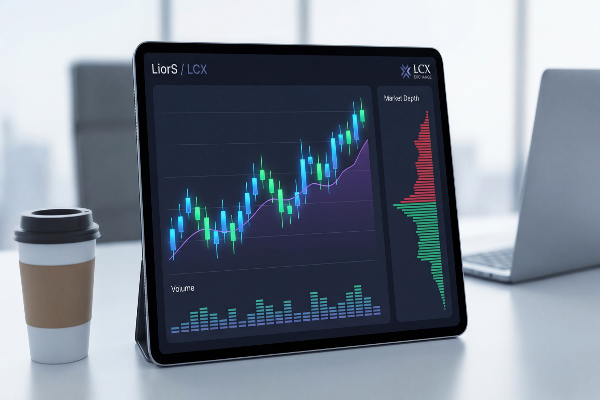
This architecture confers on LiorS an intrinsic value anchored in real economic use cases — not merely in market sentiment. It is anchored within a regulated ecosystem (LCX), providing an additional layer of compliance and institutional credibility that most crypto assets lack entirely.
This multi-dimensionality is precisely what positions LiorS closer to a structured financial product than a speculative token. In a world where regulators are increasingly scrutinizing digital assets, this distinction is not cosmetic — it is existential.
📊 73% of institutional investors prefer regulated digital asset ecosystems - Regulated crypto asset adoption
Bitcoin: Still Dominated by Macro Dynamics
Over the same two-week period, Bitcoin recorded an estimated gain of between +6% and +12% — a solid performance by any measure. The drivers behind this rally are familiar:
- Institutional flows: Continued inflows into Bitcoin ETFs and institutional custody products
- Macro arbitrage: Bitcoin increasingly used as a hedge against fiat currency debasement and geopolitical risk
- Digital store of value narrative: Its status as "digital gold" continues to attract capital during periods of uncertainty
Yet Bitcoin's performance, while impressive in raw percentage terms, comes with a set of structural limitations that are becoming harder to ignore:
- Elevated volatility: Sharp intraday swings remain characteristic of BTC price action
- Direct macro sensitivity: Bitcoin correlates strongly with global risk-on/risk-off cycles, making it reactive rather than autonomous
- Absence of integrated functional utility: Bitcoin does not generate cash flows, cannot be used as collateral within a regulated corporate framework, and offers no governance participation
Bitcoin remains, fundamentally, a macro-driven reserve asset. Its value proposition is powerful — but it is singular. It reflects the world's volatility rather than building infrastructure beyond it.
"Bitcoin's correlation with macro risk assets has increased to 0.68 in Q1 2026, reinforcing its role as a macro barometer rather than an independent asset class"
— Digital Asset Research Quarterly
Two Models, Two Valuation Logics
The comparison between Bitcoin and LiorS exposes a fundamental rupture in how digital assets can be conceived, built, and valued. This is not a question of one being "better" than the other — it is a question of what role each asset plays in a sophisticated portfolio.
| Dimension | Bitcoin (BTC) | LiorS (LIORS) |
| Core Logic | Speculative & macro-financial | Utilitarian & infrastructural |
| Correlation | Global flows, risk-on/risk-off | Ecosystem adoption & utility growth |
| Volatility Profile | Structurally elevated | Controlled and organized |
| Functional Utility | Store of value only | Payment, collateral, governance, equity |
| Regulatory Anchor | Unregulated / ETF-wrapped | LCX regulated ecosystem |
| Market Maturity Signal | Macro cycle-dependent | Bid/ask equilibrium reached |
| Ideal Investor Profile | Macro traders, institutional allocators | Structured finance, long-term builders |
| Value Driver | Sentiment & institutional demand | Real economic use + ecosystem growth |
This table illustrates that Bitcoin and LiorS are not competing for the same investor — they are serving entirely different functions within a diversified digital asset portfolio.
Strategic Reading: Toward a New Asset Class
The data from March 2026 tells a compelling story. LiorS is not simply performing well — it is transitioning through a structural market evolution:
Phase 1 → Phase 2:
From an accumulation phase → toward a mature, high-liquidity market phase
The evidence for this transition is threefold:
- Price stability despite external shocks: A -4.4% correction during a period of extreme macro stress is not weakness — it is structural robustness.
- Massive expansion in market participation: The +974% liquidity surge indicates that new participants are entering the ecosystem at scale, without triggering destabilization.
- Improved market efficiency: The bid/ask ratio reaching 1.00 is a textbook signal of a market achieving price discovery equilibrium — the hallmark of financial maturity.
Taken together, these signals suggest that LiorS is carving out a new category within the digital asset landscape: not a speculative token, not a stablecoin, but a structured, multi-functional financial asset with measurable intrinsic value and institutional-grade market mechanics.
This is the kind of asset class evolution that traditional finance has been waiting for — digital assets that behave less like lottery tickets and more like instruments of economic infrastructure.
Key Statistics
📊 -4.4% — LiorS price correction during March 21–28, 2026, despite a +974% surge in liquidity (LiorS Market Data, March 2026)
💧 +974% — Liquidity expansion recorded for LiorS in one week, with no panic selling or structural breakdown (LiorS Market Data, March 2026)
📈 +6% to +12% — Bitcoin's estimated performance over the same two-week period, driven by institutional flows and macro arbitrage (Digital Asset Market Estimates, March 2026)
⚖️ 1.00 — LiorS bid/ask order book ratio, signaling transition to an efficient, balanced market (LiorS Order Book Analysis, March 2026)
FAQ
What is LiorS (LIORS) and how does it differ from Bitcoin?
LiorS (LIORS) is a next-generation structured token designed with a hybrid financial architecture that combines payment utility, corporate collateralization, governance participation, and quasi-equity exposure. Unlike Bitcoin, which functions primarily as a macro-driven store of value, LiorS derives its value from real economic use cases within a regulated ecosystem (LCX). This multi-functionality gives LiorS an intrinsic value anchor that Bitcoin does not possess.
Why did LiorS only drop -4.4% when liquidity surged +974%?
This counterintuitive dynamic reflects the structural health of the LiorS market. A near-1,000% surge in liquidity typically creates significant selling pressure in speculative assets. The fact that LiorS absorbed this expansion with only a modest -4.4% correction indicates the absence of panic selling, orderly profit-taking, and deep structural demand. It is a signal of market maturation, not weakness.
Is Bitcoin still a good investment in 2026?
Bitcoin remains a powerful macro asset and digital store of value. Its +6% to +12% performance in March 2026 demonstrates continued institutional demand and relevance as a hedge against geopolitical risk and fiat debasement. However, its structurally elevated volatility and lack of integrated functional utility mean it serves a specific role — macro portfolio diversification — rather than functioning as a multi-dimensional financial instrument.
What does a bid/ask ratio of 1.00 mean for LiorS?
A bid/ask ratio of 1.00 means that buying pressure and selling pressure are perfectly balanced in the order book. This is a classical indicator of market efficiency — a state typically observed in mature, liquid financial markets. For LiorS, reaching this ratio signals a transition from a directional, momentum-driven market to an efficient price discovery environment, which is a significant milestone for a structured digital asset.
What is the LCX regulated ecosystem and why does it matter?
LCX is a regulated digital asset exchange and ecosystem that provides institutional-grade compliance infrastructure for listed tokens. LiorS being anchored within the LCX ecosystem means it operates under regulatory oversight, offering institutional investors a level of compliance assurance that most crypto assets cannot provide. In an era of increasing regulatory scrutiny, this distinction is a critical competitive advantage.
In a crypto market undergoing profound structural transformation, Bitcoin and LiorS no longer compete in the same category.
Bitcoin remains what it has always been: a macro barometer and speculative reserve asset, capturing the world's volatility and reflecting global risk sentiment with remarkable fidelity. For traders, macro allocators, and institutional hedgers, it remains indispensable.
LiorS, by contrast, is progressively asserting itself as something genuinely new: a structured, multi-dimensional financial asset with real utility, regulated infrastructure, and market mechanics that mirror institutional-grade instruments rather than speculative tokens.
Where Bitcoin captures the world's volatility, LiorS is building durable value infrastructure.
The March 2026 data makes this distinction undeniable. As the digital asset ecosystem matures, the most sophisticated investors will not choose between Bitcoin and LiorS — they will understand that each serves a distinct and complementary role in a next-generation portfolio.
The question is no longer which crypto will go up. The question is: which assets are building the financial infrastructure of tomorrow?
































































































Share
00 Comments
No Comments found!