1. Market Context: Geopolitical Shock and Systemic Repricing
The period from February 24 to March 3, 2026 unfolded under intense geopolitical tension. The escalation between Iran, Israel, and the United States triggered broad risk-off behavior across global financial markets.
Cryptocurrencies were not immune. Bitcoin experienced heightened volatility, while major digital assets continued their drawdown from previous peaks. Market liquidity thinned, institutional flows slowed, and derivatives markets reflected reduced leverage appetite.
This macro environment is critical to understanding LIORS performance: the token’s price action reflects systemic repricing, not project-specific fragility.
2. LIORS Market Performance Metrics
Between February 24 and March 3:
-
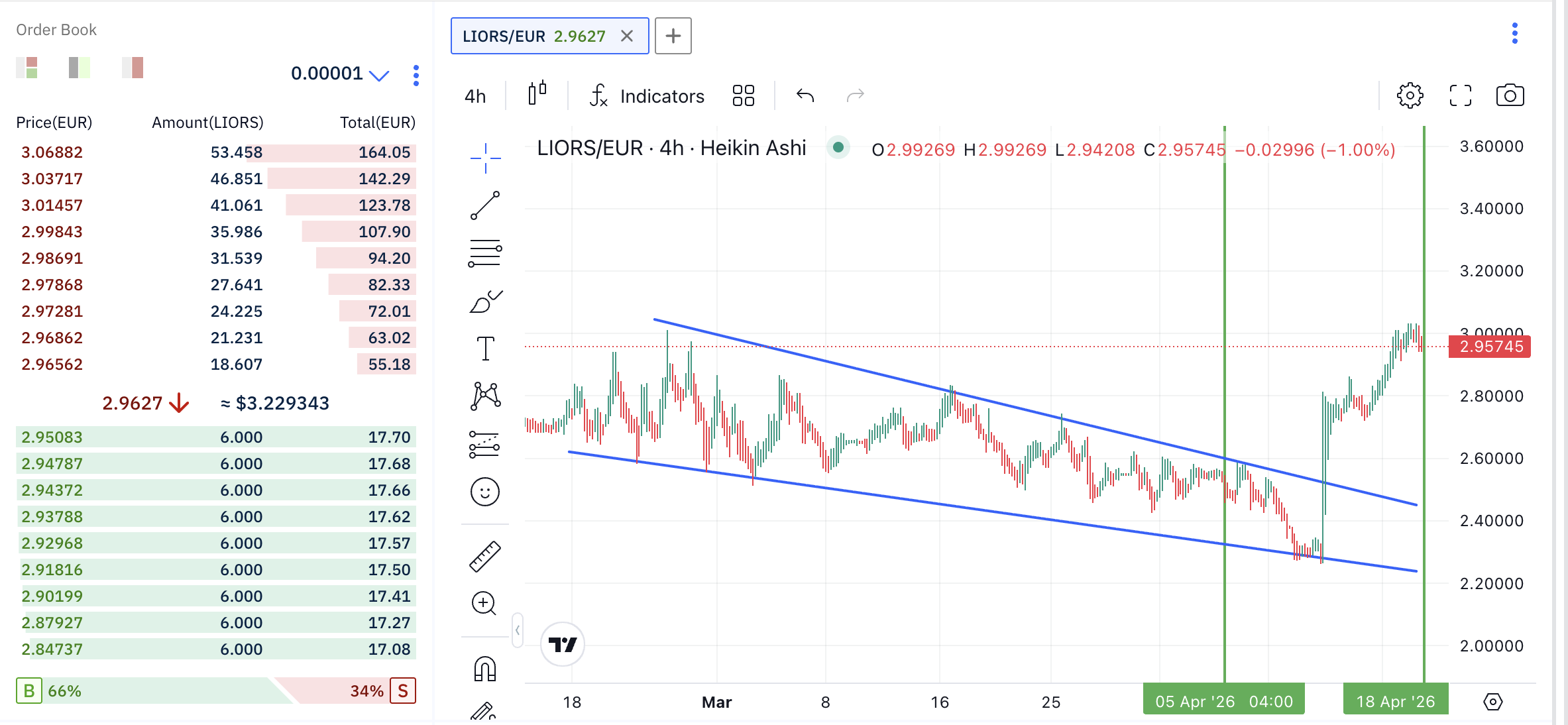
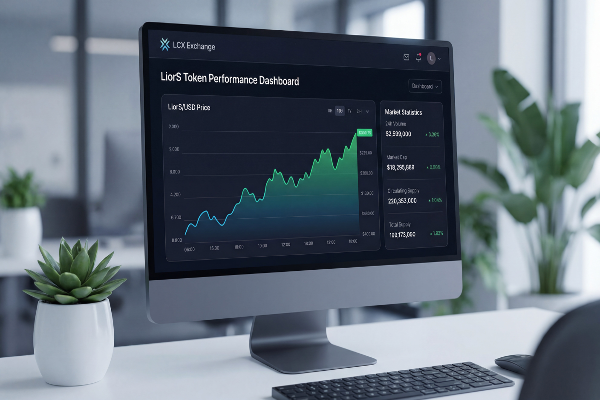
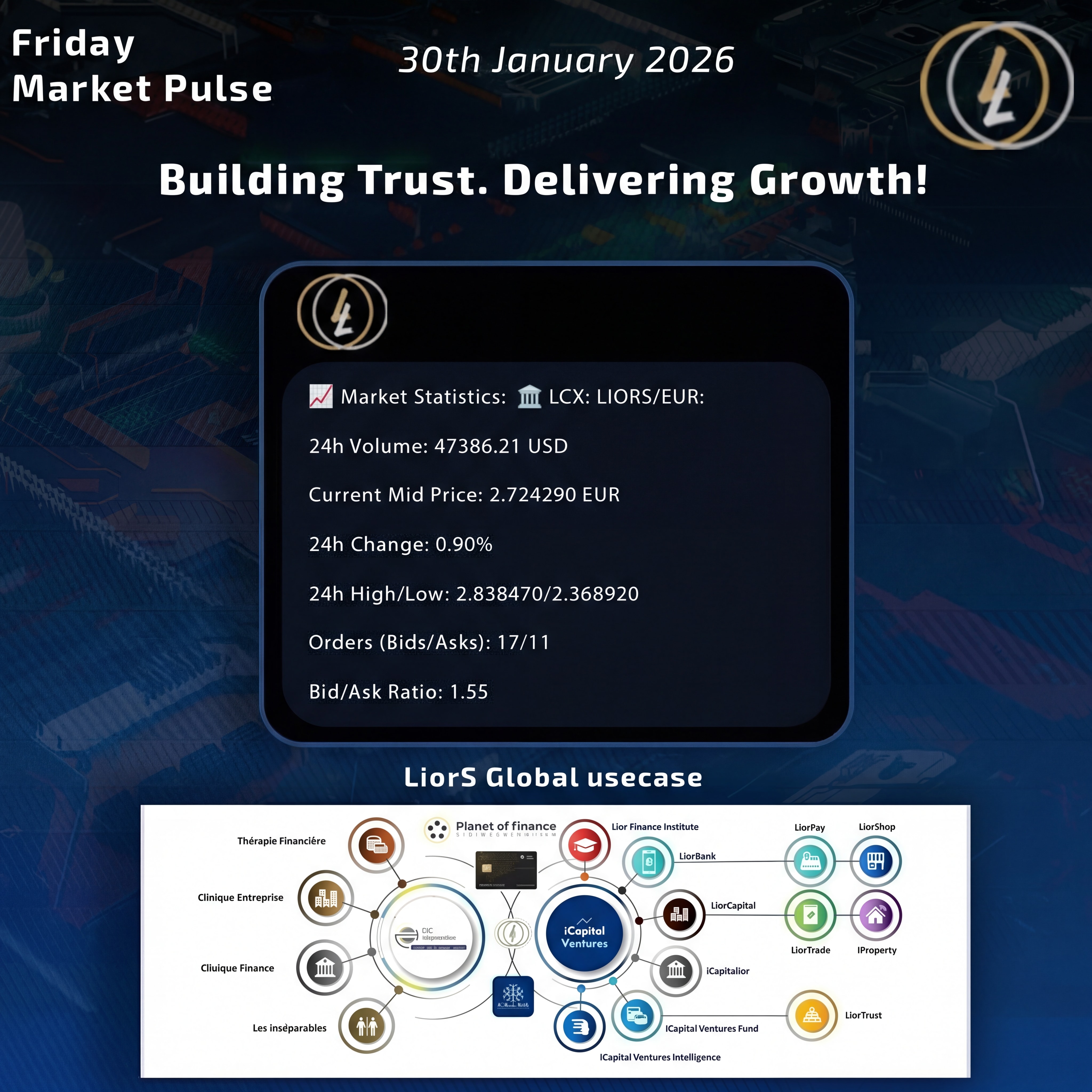
Mid-price corrected from €2.90 to €2.58 (-10.9%)
-
24-hour change stood at -1.44%, indicating controlled volatility
-
Trading volume adjusted by -7.6%, reflecting broader liquidity contraction
-
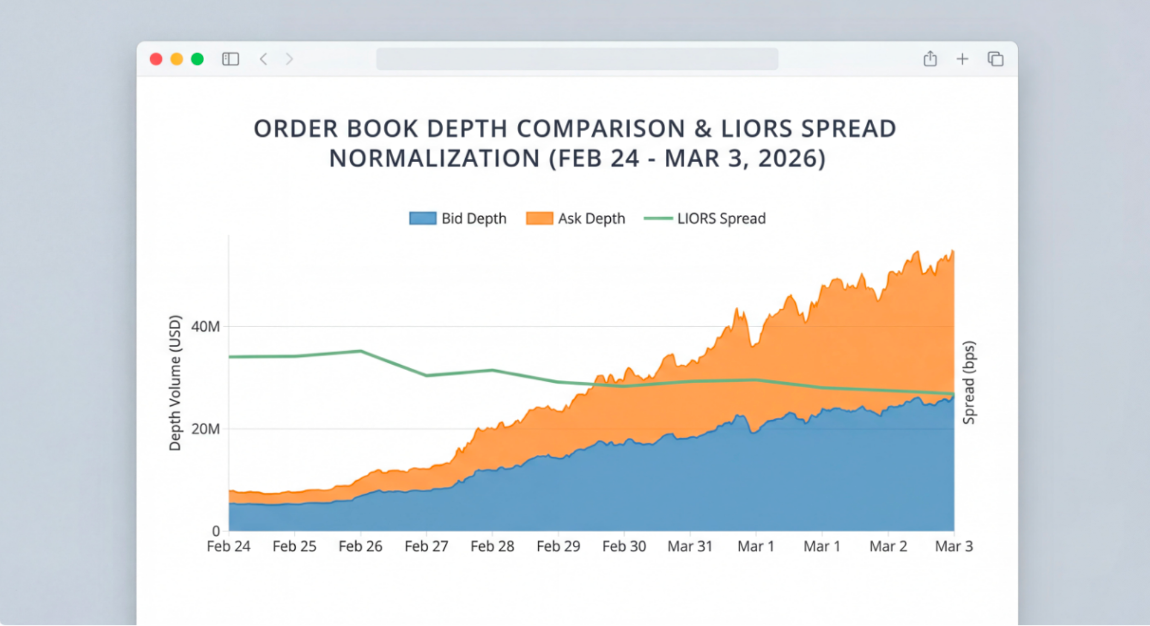
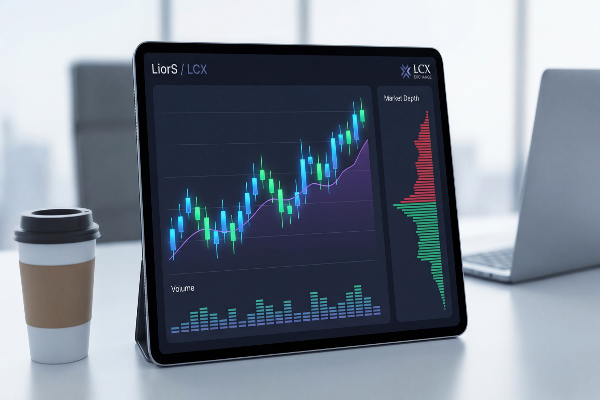
Order book depth expanded significantly (bid depth +100%, ask depth +267%)
-
Bid/Ask ratio normalized from 2.67 to 1.45
When contextualized against broader market performance — Bitcoin (-48% from ATH), Ethereum (-61%), Solana (-72%) — LIORS’ 10.9% correction appears structurally contained.
This relative resilience signals orderly repricing rather than forced liquidation.
3. Consolidation vs. Capitulation
A key analytical distinction must be made:
Capitulation is characterized by panic selling, evaporating liquidity, collapsing order books, and forced deleveraging.
Consolidation, by contrast, involves:
-
Controlled price discovery
-
Improving liquidity depth
-
Balanced buyer/seller dynamics
-
Structural accumulation
LIORS clearly fits the consolidation profile.
Order book depth increased.
Bid/ask spread normalized.
Volatility remained measured.
Liquidity stayed active.
This behavior suggests structural resilience and disciplined market participation.
4. Four-Pillar Financial Architecture
LIORS derives strength from its multi-layered financial architecture:
1️⃣ Payment Infrastructure Token
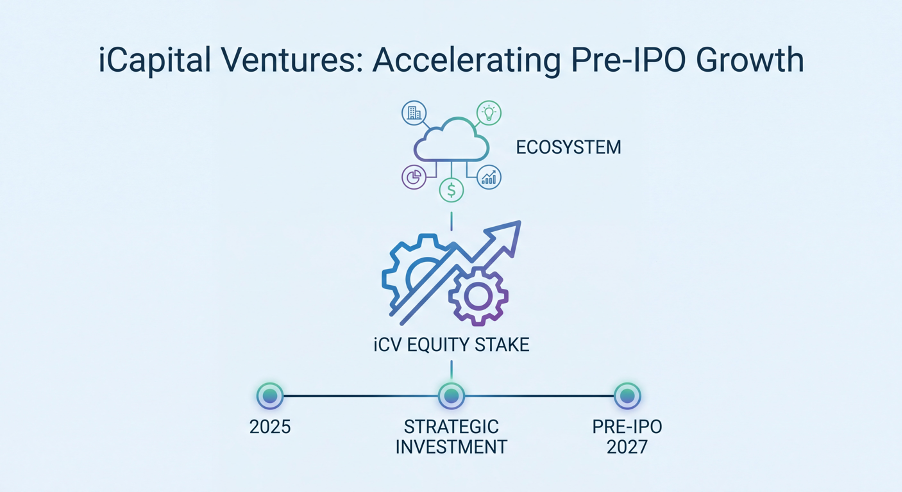
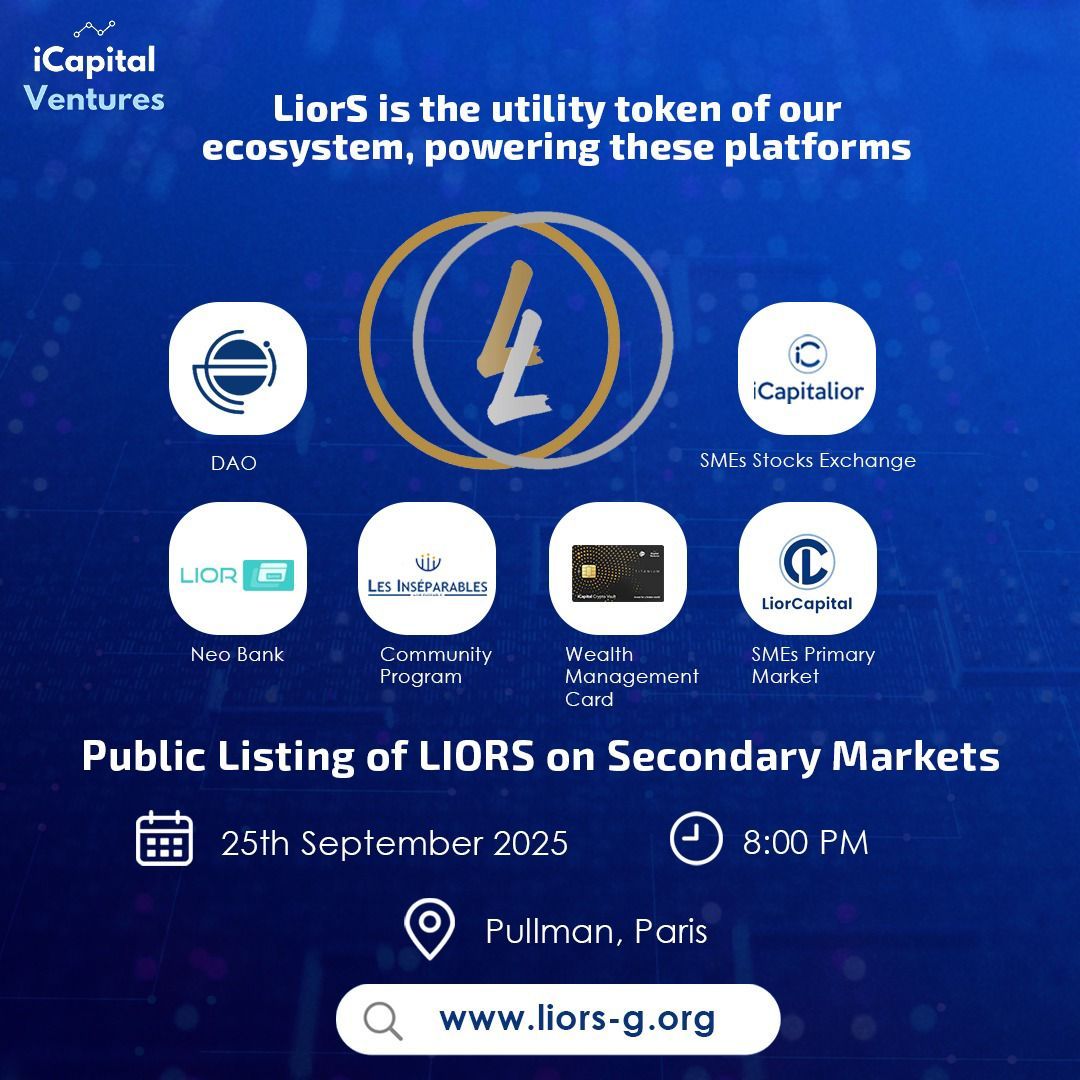
Embedded within the iCapital Ventures ecosystem, LIORS benefits from increasing institutional adoption of blockchain-based payment rails. Global trends show expanding stablecoin usage and payment token integration.
2️⃣ Collateral-Grade Digital Asset
Collateral-grade assets require liquidity, regulatory clarity, and risk management utility.
LIORS trades on LCX, a regulated exchange in Liechtenstein, providing institutional-grade infrastructure.
3️⃣ Governance Instrument
Governance tokens are increasingly aligned with regulatory frameworks such as MiCAR. LIORS enables stakeholder participation and structured decision-making.
4️⃣ Participation / Quasi-Equity Layer
LIORS provides economic exposure to ecosystem performance, combining utility with value participation characteristics.
This multi-dimensional structure differentiates LIORS from speculative tokens lacking functional depth.
5. Comparative Market Positioning
While broader crypto markets experienced severe drawdowns, LIORS demonstrated:
In a market where overall crypto liquidity has contracted to multi-year lows, LIORS’ expanding order book depth signals strong market-maker commitment.
6. Outlook
Short-Term (Q2 2026)
Performance remains sensitive to geopolitical developments and macro sentiment. Stabilization of global tensions could catalyze relief rallies.
Medium-Term (H2 2026)
Drivers include:
-
Tokenization acceleration
-
Payment infrastructure adoption
-
Regulatory clarity (MiCAR, US framework developments)
-
LCX ecosystem expansion
Long-Term (2027+)
As tokenization reshapes capital markets, structurally sound assets combining payment utility, collateral functionality, governance rights, and economic participation may capture disproportionate value.
The February 24 – March 3 period tested digital asset resilience under geopolitical stress.
LIORS demonstrated:
This was consolidation not capitulation.
As markets mature, structurally designed digital assets with regulatory alignment and functional utility are likely to outperform purely narrative-driven tokens.
LIORS stands at the intersection of payment infrastructure, collateral-grade positioning, governance design, and participation economics a differentiated profile within the evolving digital asset landscape.




























































































Share
00 Comments
No Comments found!