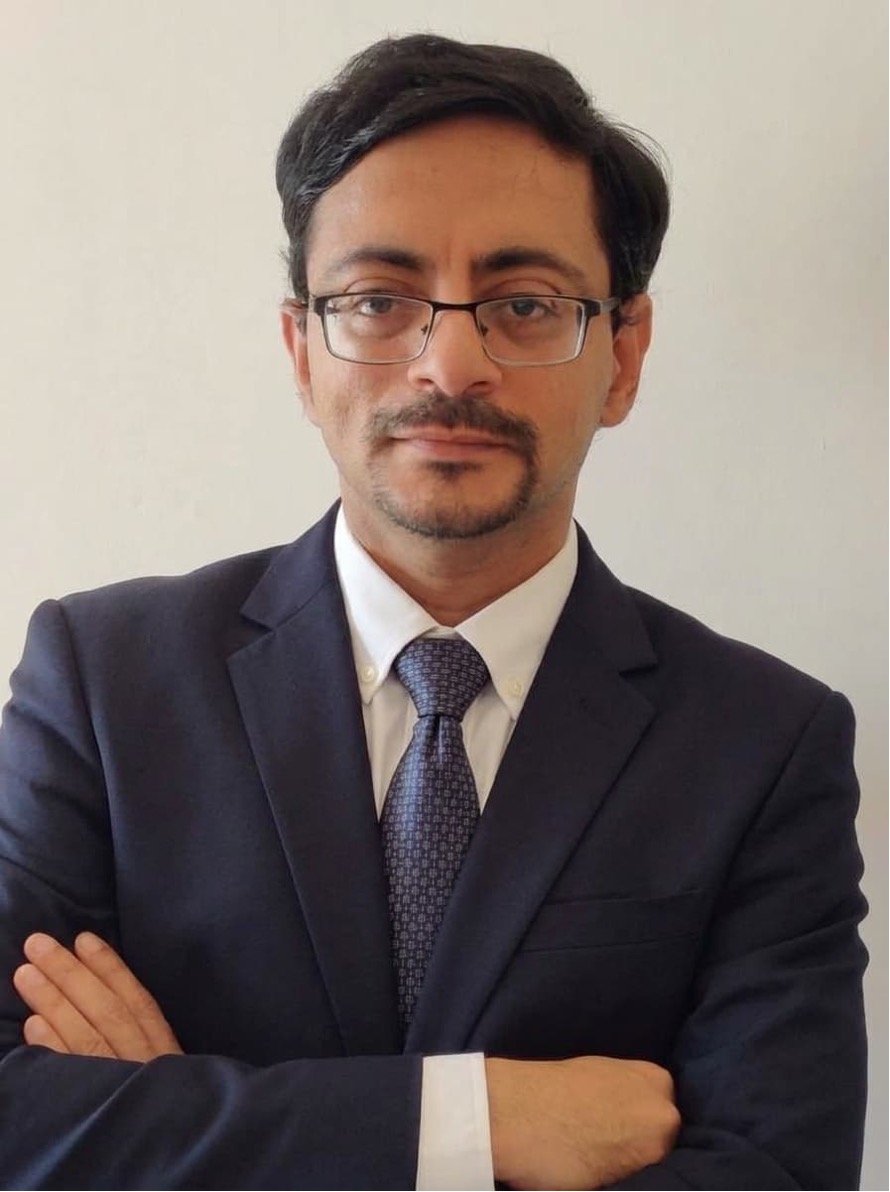
India’s startup ecosystem is evolving rapidly—but innovation is not limited to products, technologies, or business models. The way entrepreneurs access capital is changing too. At the center of this transformation is Satish Kataria, a serial entrepreneur, venture capitalist, founder coach, author, podcaster, and advocate for alternative funding models.
Over more than two decades, Satish Kataria has worked across brand management, public relations, investor relations, venture capital, media, entrepreneurship, and Web3 advisory. He is credited with helping introduce pioneering funding models in India, including crowdfunding and revenue-based funding. Today, his work extends into content rights, asset tokenisation, Web3 strategy, and the development of India’s early-stage investment ecosystem.
As Executive Director of the Association of Prolific Angels in India (APAII), Satish is now contributing to a broader mission: strengthening India’s domestic capital base and creating better connections between founders, investors, policymakers, and ecosystem institutions.
Table of Contents
Who Is Satish Kataria?
Satish Kataria is a Mumbai-based entrepreneur and investor known for identifying emerging opportunities at the intersection of capital, technology, media, and entrepreneurship.
His professional journey spans more than 23 years and includes roles in:
- Brand management
- Public relations
- Investor relations
- Venture capital fund management
- Startup mentoring
- Entrepreneur coaching
- Media and content
- Web3 advisory
- Alternative investment strategy
He has also participated in investment teams at venture capital funds focused on real estate, media, and early-stage startups. This combination of operating experience and investment expertise gives him a broad perspective on what founders need—not only to raise capital, but also to build sustainable companies.
Satish describes his work as a process of bridging ecosystems. His focus is not simply on connecting entrepreneurs with investors. It is also about helping founders understand capital structures, improve their positioning, communicate their value, and develop strategies that can support long-term growth.
"Satish Kataria describes his experience across entrepreneurship, venture capital, Web3 advisory, crowdfunding, and founder coaching"
— Satish Kataria’s professional profile
A Career Built Around Funding Innovation
Many startup founders think of fundraising as a single event: prepare a pitch deck, contact investors, negotiate terms, and close the round. Satish Kataria’s career reflects a broader view. Funding is an ecosystem, and each business may require a different form of capital.
Traditional venture capital can be powerful, but it is not suitable for every company. Some businesses need:
- Early validation from customers
- Flexible working capital
- Revenue-linked financing
- Access to industry-specific investors
- Community participation
- Structured ownership models
- Strategic guidance rather than only cash
Satish’s work has consistently explored these alternatives. From crowdfunding to revenue-based funding and tokenised rights, his career illustrates how funding models can evolve alongside entrepreneurs and markets.
📊 More than 23 years across entrepreneurship, venture capital, media, branding, and advisory - Professional experience
Bringing Crowdfunding to India
Satish Kataria is widely associated with the early development of crowdfunding in India. In 2010, he helped launch what he describes as India’s first crowdfunding platform, creating a digital bridge between founders and a wider community of supporters.
He later co-founded Catapooolt in 2013. The platform focused on reward-based and non-equity crowdfunding, allowing early-stage businesses, creators, and innovators to seek support without immediately giving away ownership.
This model offered several advantages:
| Traditional early-stage challenge | Crowdfunding approach |
| Founders rely on a small number of investors | Founders can engage a broader community |
| Funding often depends on investor networks | Customer interest can help validate demand |
| Capital and marketing are separate activities | Fundraising can also generate awareness |
| Investors may be distant from the product | Supporters can become early customers |
| Validation may happen after funding | Market feedback can arrive before scale |
For founders, crowdfunding is not merely a financing tool. It can also serve as a market research mechanism, customer acquisition strategy, and storytelling platform.
However, successful crowdfunding requires more than publishing a campaign. Founders must understand their audience, create a compelling offer, plan fulfilment carefully, and communicate consistently throughout the campaign.
Satish has emphasized the importance of identifying a specific audience before launching a pitch. This principle remains relevant across fundraising models: capital follows clarity, credibility, and demonstrated demand.
"SEBI’s consultation paper examined crowdfunding models, platform responsibilities, investor protection, and access to capital for startups and SMEs"
— Securities and Exchange Board of India
Revenue-Based Funding and Alternative Capital
After working with crowdfunding, Satish Kataria explored another alternative funding model: revenue-based funding.
Unlike equity financing, revenue-based funding does not necessarily require founders to surrender ownership. Instead, a business receives capital and repays it through an agreed percentage of future revenue until a defined return or repayment cap is reached.
This model can be particularly relevant for companies that:
- Already generate revenue
- Have predictable cash flows
- Want to avoid excessive dilution
- Need growth capital rather than venture capital
- Operate in sectors that may not fit traditional VC expectations
Satish launched Aavejak, described as India’s first revenue-based funding platform, to help address this gap.
The model reflects an important shift in startup finance. Not every promising business should be evaluated only through the lens of hypergrowth, unicorn potential, or large equity rounds. Some companies can create value through disciplined expansion, recurring revenue, and sustainable profitability.
Comparing Common Funding Models
| Funding model | Ownership dilution | Best suited for | Key consideration |
| Angel investment | Usually yes | Early-stage startups with high growth potential | Investors seek equity and influence |
| Venture capital | Yes | Scalable companies targeting large markets | Strong growth expectations |
| Crowdfunding | Depends on structure | Consumer products, creative projects, community-led ventures | Requires strong public engagement |
| Revenue-based funding | Usually limited or none | Revenue-generating businesses | Repayment depends on future revenue |
| Debt financing | No direct dilution | Businesses with repayment capacity | Interest and repayment obligations |
| Asset tokenisation | Structure-dependent | Rights-linked assets and alternative investments | Legal classification and investor protection are critical |
The broader lesson is clear: founders should choose capital based on business fundamentals, not on trends alone.
From Venture Capital to Web3 and Asset Tokenisation
Satish’s current work extends into Web3, content licensing, and real-world asset tokenisation.
As co-founder of Fandora, he has explored how Web3 can create a new category of media rights. The concept focuses on connecting content creators with emerging Web3 platforms and enabling content rights to become more discoverable, structured, and potentially monetisable.
This is especially relevant in industries where intellectual property can generate value across multiple channels:
- Film and television
- Music
- Digital content
- Gaming
- Brand collaborations
- Licensing
- Merchandise
- Regional-language entertainment
- Immersive and metaverse experiences
A single piece of intellectual property may generate revenue through theatrical distribution, streaming, music rights, remakes, international licensing, merchandising, and digital experiences. Tokenisation may offer a way to digitally represent certain rights or economic interests—but it does not replace the need for sound contracts, ownership verification, governance, and regulatory compliance.
In India, tokenisation remains an evolving area. The legal treatment of a token depends heavily on the rights it represents and the structure through which it is issued. A token connected to a financial security, payment instrument, intellectual property right, or real-world asset may raise different regulatory considerations.
For this reason, responsible tokenisation must begin with the legal and economic structure—not with the blockchain technology.
"India’s proposed Asset Tokenisation (Regulation) Bill, 2026 describes asset tokens as digital representations of rights or interests in underlying assets and proposes regulator-led oversight"
— Parliament of India
Satish Kataria and APAII
In 2026, Satish Kataria became Executive Director of the Association of Prolific Angels in India, or APAII.
APAII brings together more than 30 leading angel funds, early-stage funds, family offices, micro-VCs, and individual investors. Its objective is to strengthen India’s early-stage capital ecosystem and create a structured interface between investors, founders, regulators, and other stakeholders.
The association’s focus includes:
- Expanding India’s domestic angel investor base
- Improving collaboration between angel networks
- Supporting policy dialogue
- Enabling more early-stage capital
- Connecting investors with founders
- Promoting mentorship and industry access
- Building a stronger environment for innovation and job creation
This role represents a natural extension of Satish’s career. He has spent years helping founders access capital, helping investors understand opportunities, and exploring how new funding models can serve both sides of the market.
APAII’s formation also reflects the increasing maturity of India’s startup ecosystem. As more companies emerge outside traditional technology hubs, founders need access to capital, networks, expertise, and strategic support across sectors and regions.
📊 More than 30 angel funds, early-stage funds, family offices, micro-VCs, and individual investors - APAII membership
"APAII was launched as a national body intended to strengthen India’s early-stage capital ecosystem and serve as a bridge between investors, founders, and policymakers"
— YourStory
Mentorship, Founder Coaching, and Knowledge Sharing
Satish Kataria’s influence extends beyond investment platforms and funding structures. He has coached more than 100 entrepreneurs, primarily helping them with fundraising strategy, positioning, strategic growth, and entrepreneurial mindset.
His mentoring approach is rooted in practical execution. Founders often need help answering questions such as:
- Is the business ready to raise capital?
- What type of capital is most appropriate?
- How should the opportunity be presented to investors?
- Which milestones matter most?
- How can the company demonstrate traction?
- What should be prioritised after fundraising?
Through his work as an entrepreneur coach, author, and podcaster, Satish has created multiple formats for sharing these insights.
His book, UNBLOC: 21+ Transformational Thoughts to Unblock Success, focuses on mindset and entrepreneurial growth. His podcast, Find Your Founder Mojo, explores the early stages of entrepreneurship and the first 100 days of building a venture.
These initiatives reflect a belief that entrepreneurship is not only about capital. It is also about decision-making, resilience, communication, self-awareness, and the ability to keep moving through uncertainty.
Why Satish Kataria’s Work Matters
Satish Kataria’s career is significant because it connects several important shifts in India’s business ecosystem.
1. Funding is becoming more diverse
Founders now have more options than traditional bank loans or equity financing. Crowdfunding, revenue-based funding, angel networks, venture debt, family offices, and structured investment vehicles are expanding the capital toolkit.
2. Investors are looking beyond conventional startups
Media, content, intellectual property, real-world assets, and alternative investment opportunities are attracting greater attention. This creates possibilities for new asset classes—but also requires stronger due diligence and governance.
3. Technology is changing ownership models
Blockchain and tokenisation can potentially improve transparency, fractional access, programmability, and transaction records. However, technology only creates value when supported by enforceable rights and credible underlying assets.
4. Ecosystem-building is becoming essential
A strong startup ecosystem requires more than individual investors. It needs networks, education, policy dialogue, mentors, service providers, and institutions that can help founders and capital providers work together effectively.
5. Founder readiness matters as much as investor access
One of Satish’s recurring themes is that entrepreneurs should focus on becoming investor-ready rather than simply searching for investors. A clear business model, credible data, realistic projections, strong storytelling, and evidence of execution can significantly improve fundraising outcomes.
Questions Fréquentes
Who is Satish Kataria?
Satish Kataria is an Indian serial entrepreneur, venture capitalist, founder coach, author, podcaster, and Web3 advisor. He is known for pioneering alternative funding models, including crowdfunding and revenue-based funding, and for working across early-stage investing, media, and technology.
What is Satish Kataria known for?
He is known for helping introduce crowdfunding to India, co-founding Catapooolt, launching Aavejak as a revenue-based funding platform, advising startups and brands, and exploring Web3 applications for media rights and asset tokenisation.
What is APAII?
The Association of Prolific Angels in India is a national association bringing together angel funds, early-stage funds, family offices, micro-VCs, and individual investors. APAII aims to strengthen India’s early-stage capital ecosystem and improve collaboration between investors, founders, and policymakers.
What is revenue-based funding?
Revenue-based funding is a financing model in which a business receives capital and repays it through a percentage of future revenue. It can allow revenue-generating companies to raise capital without necessarily giving up equity.
What does Satish Kataria do in Web3?
Satish advises brands and content companies on Web3 strategy and explores how content rights, intellectual property, and real-world assets can be structured for digital participation, licensing, and tokenisation.
Key figures
📊 23+ years of professional experience across entrepreneurship, venture capital, branding, media, and advisory work.
🚀 100+ entrepreneurs coached through fundraising, strategic growth, and entrepreneurial mindset development.
🤝 30+ investment organisations associated with APAII, including angel funds, early-stage funds, family offices, and individual investors.
💡 Three funding innovations strongly associated with Satish Kataria’s journey: crowdfunding, revenue-based funding, and asset tokenisation.
Satish Kataria’s journey reflects the evolution of India’s startup and investment ecosystem. From introducing crowdfunding and revenue-based funding to exploring Web3 media rights and tokenised assets, his work has consistently focused on expanding access to capital and creating stronger connections between founders, investors, and emerging technologies.
His leadership at APAII adds another dimension to this mission. By helping organise India’s early-stage investment community, Satish is contributing to a more connected, informed, and collaborative funding environment.
For entrepreneurs, his story offers a practical lesson: the future of fundraising will not be defined by one universal model. It will be shaped by the ability to match the right form of capital with the right business, structure, stage, and ambition.

















































































Share
00 Comments
No Comments found!