The future of money will not be shaped by technology alone. It will also depend on how societies define value, distribute wealth, govern digital infrastructure, and build trust across borders.
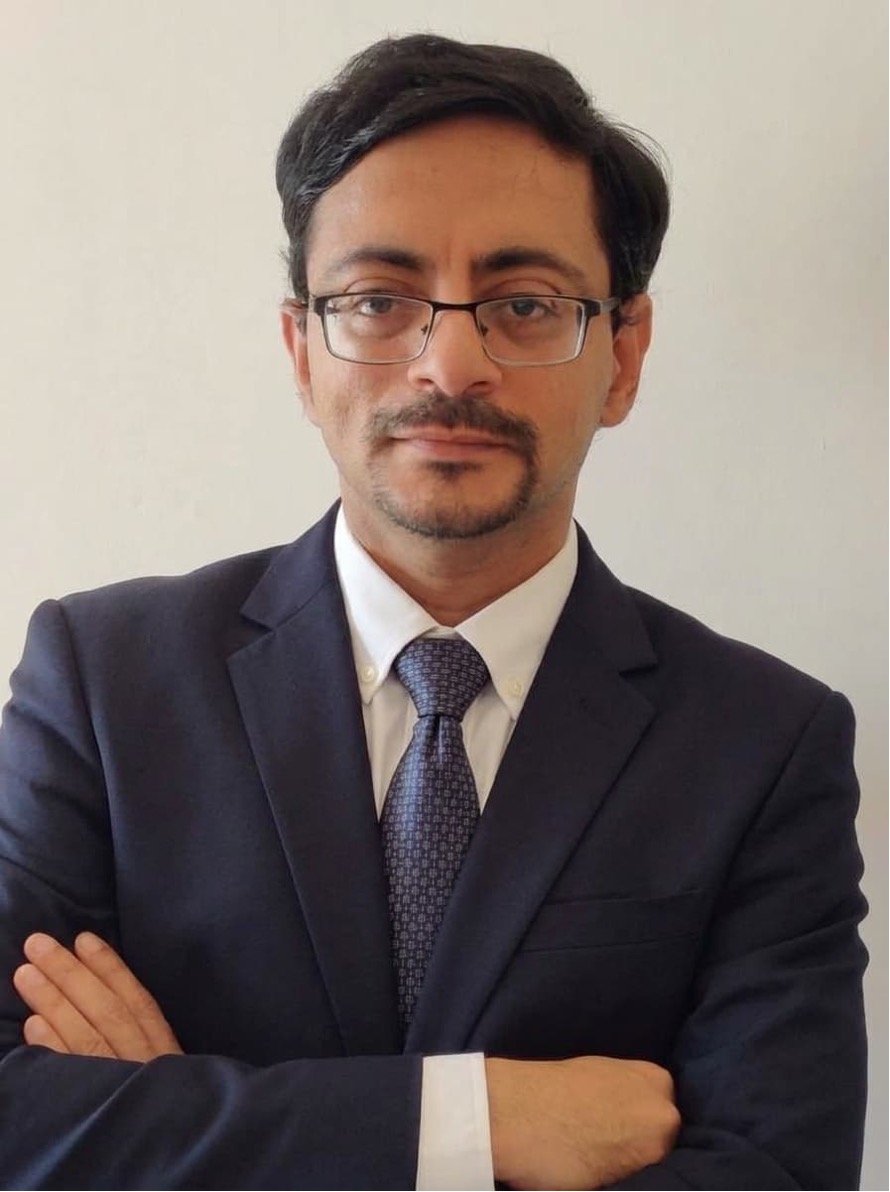
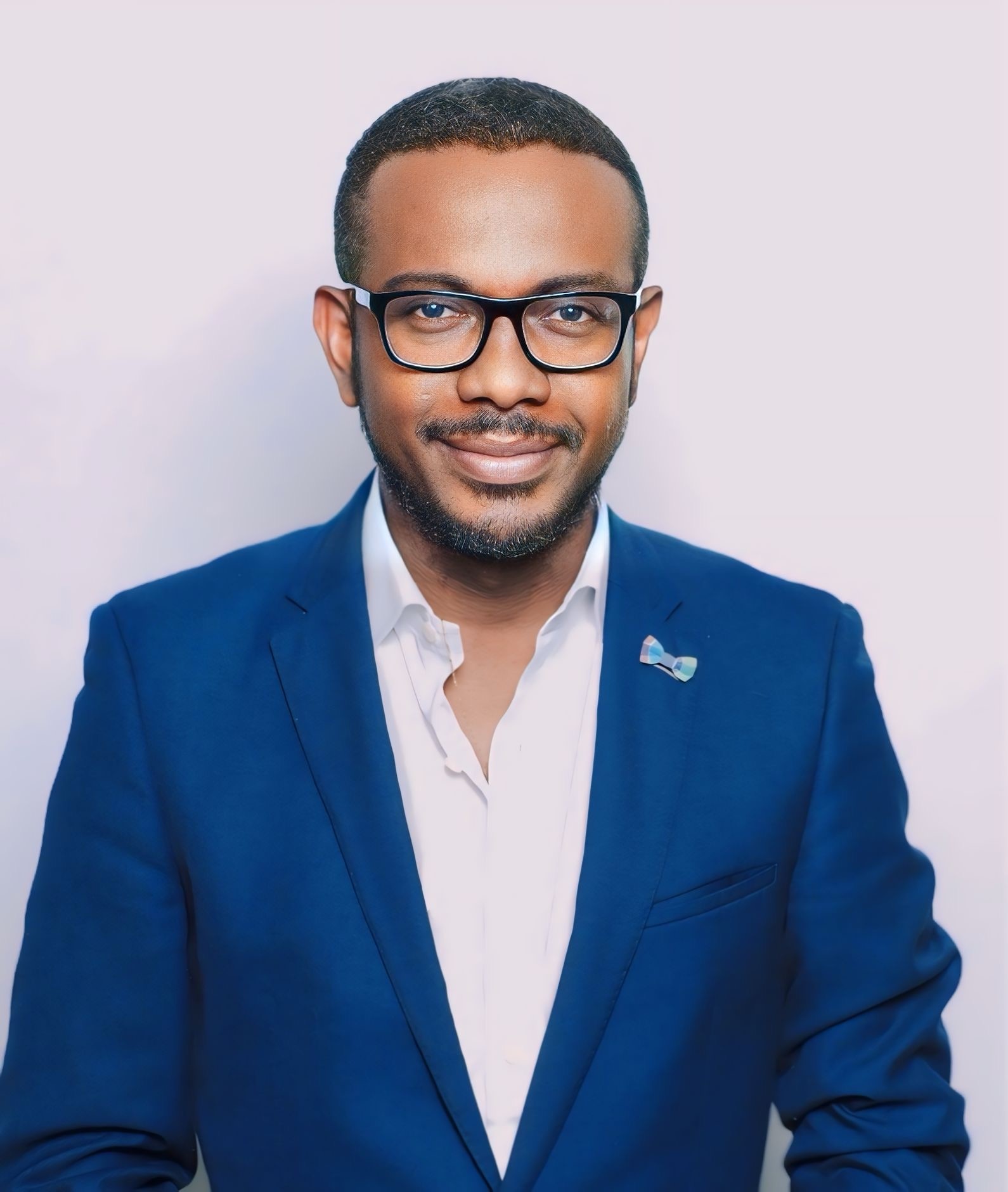
This is the central question explored by Sary Qasim, a macroeconomist, digital transformation leader, and blockchain strategist with more than 15 years of cross-sector experience across the Middle East and GCC. In his 2026 book, The Nations Evolution, Qasim presents a framework known as Blockchain Macroeconomics Theory, or BMT, connecting economic design with blockchain, digital assets, decentralized governance, and emerging technologies.
Rather than treating blockchain as a speculative financial tool, Qasim approaches it as a potential foundation for new economic and institutional systems. His work examines how decentralized infrastructure could support more transparent governance, measurable social impact, and a redesigned relationship between money, production, and human development.
"The Nations Evolution presents an economic and technological thesis called Blockchain Macroeconomics Theory, examining the intersection of governance, economic design, and Web3 technologies"
— Amazon book listing
Table of Contents
Who Is Sary Qasim?
Sary Qasim is a macroeconomist and digital transformation executive whose career combines industrial operations, enterprise management, financial innovation, and blockchain strategy.
His professional experience spans heavy industries, enterprise technology, and emerging digital ecosystems across the Middle East and GCC. He has held leadership roles in digital strategy and transformation while advising organizations on the practical adoption of advanced technologies within industrial and financial environments.
Qasim currently serves as:
- MENA Regional Lead at the Government Blockchain Association
- Board member of the Government Blockchain Association
- Board member of i-Blockchain Bahrain
- Chief Strategy Officer at iBLOCKCHAIN
- Chief Executive Officer of DILMET Holding W.L.L.
- Co-founder of Planet Brain City
His work has also included advising regional governments and major companies on digital assets, decentralized governance, smart communities, and Web3 transformation.
The Government Blockchain Association has recognized Qasim’s leadership in developing its MENA presence and supporting blockchain-focused collaboration across the region. He received the organization’s Leadership Award in 2023 in recognition of his contribution to the GBA community. citeturn9search6
"Sary Qasim received the GBA Leadership Award for building an exceptional team and advancing the organization’s agenda in the MENA region"
— Government Blockchain Association
What Is The Nations Evolution About?
Published in 2026, The Nations Evolution is positioned as an integrated intellectual, economic, and technical study. The book examines how nations may need to rethink traditional economic structures in response to blockchain, artificial intelligence, digital assets, and new forms of decentralized coordination.
Its core argument is that technology should not merely digitize existing institutions. Instead, it should encourage society to reconsider the foundations of:
- Money
- Value
- Economic growth
- Public infrastructure
- Governance
- Wealth distribution
- National sovereignty
- Human development
Qasim’s approach is broader than a conventional book about cryptocurrency. The focus is not simply whether Bitcoin, stablecoins, or central bank digital currencies will succeed. The deeper question is whether current economic structures are capable of handling a world shaped by automation, artificial intelligence, digital networks, and near-instant global transactions.
The book proposes a model that attempts to combine market incentives with social guarantees. Its framework includes a Basic Needs Layer, designed around access to essential services such as water, food, housing, energy, and communications, alongside a Market Layer intended to preserve innovation, entrepreneurship, and competition.
This dual-layer structure reflects a central idea in Qasim’s work: economic freedom and social justice do not necessarily need to be treated as opposing forces.
Understanding Blockchain Macroeconomics Theory
Blockchain Macroeconomics Theory is the conceptual foundation of The Nations Evolution. It applies blockchain principles to questions traditionally associated with macroeconomics.
Traditional macroeconomic systems rely on institutions such as central banks, commercial banks, governments, tax authorities, and international financial organizations. These institutions perform essential functions, but they also create challenges involving transparency, debt accumulation, wealth concentration, inflation, and uneven access to capital.
BMT explores whether distributed ledgers, smart contracts, digital identity, decentralized governance, and measurable impact systems could create more transparent economic coordination.
The main principles of BMT
1. Linking money to measurable impact
One of the concepts discussed in Qasim’s framework is Proof of Growth Multipliers, or PoG. This approach proposes that the creation or distribution of digital value could be connected to measurable social, environmental, and developmental outcomes.
In practice, this could involve smart contracts that record and verify outcomes such as:
- Renewable energy production
- Water conservation
- Food security
- Affordable housing
- Educational access
- Healthcare delivery
- Employment creation
- Environmental restoration
The underlying principle is that economic expansion should be connected to real-world growth rather than financial speculation alone.
2. Separating essential rights from market activity
The Basic Needs Layer proposed in the book is designed to ensure that essential services are treated as a shared human foundation. The Market Layer would then provide space for competition, entrepreneurship, and innovation.
This structure challenges the assumption that every human necessity must be distributed exclusively through purchasing power. It also avoids eliminating markets entirely, recognizing that competition remains important for productivity and innovation.
3. Using decentralized governance
Blockchain-based governance can make rules, transactions, and decisions more visible. However, decentralization does not automatically guarantee fairness. Effective systems still require clear legal frameworks, accountable institutions, privacy protections, and mechanisms for dispute resolution.
Qasim’s work therefore places blockchain within a wider governance framework rather than treating it as a standalone solution.
The Future of Money Beyond Bitcoin
Sary Qasim’s position on Bitcoin is nuanced. He recognizes Bitcoin’s importance as a decentralized ledger innovation and credits it with opening the door to broader blockchain development. However, he questions whether Bitcoin can function as the primary reserve currency or universal medium of international trade.
This distinction is important because blockchain technology and Bitcoin are not the same thing.
| Category | Primary Function | Issuer or Controller | Key Strength |
| Bitcoin | Decentralized digital asset and payment network | Distributed network | Scarcity and censorship resistance |
| Stablecoin | Digital asset designed to maintain a stable value | Private issuer or financial institution | Programmable payments and settlement |
| CBDC | Digital form of central bank money | Central bank | Sovereign monetary backing |
| Tokenized deposit | Digital representation of commercial bank money | Commercial bank | Compatibility with existing banking systems |
| Blockchain infrastructure | Shared ledger for recording and verifying transactions | Network participants | Transparency and coordination |
Qasim’s critique centers on the question of economic circulation. If wealth becomes concentrated in a limited number of wallets or institutions, decentralization at the technical level may not produce decentralization at the social level.
This raises several macroeconomic questions:
- Who controls the money supply?
- How is purchasing power distributed?
- Can a fixed-supply asset support economic growth?
- How should governments respond to financial crises?
- Can digital money serve both individual freedom and public stability?
- What mechanisms prevent digital wealth from becoming concentrated?
These questions are increasingly relevant as central banks, financial institutions, and governments examine digital currencies. A 2025 U.S. Treasury advisory document mapped a broad spectrum of digital money, including stablecoins, CBDCs, cryptocurrencies, tokenized deposits, and tokenized financial assets. citeturn11search5
📊 91% of 93 surveyed central banks were exploring retail CBDCs, wholesale CBDCs, or both - Central bank digital currency exploration
Why the MENA Region Matters
The Middle East and North Africa region has become an important laboratory for digital finance, blockchain policy, smart cities, and economic transformation.
Countries across the GCC and wider MENA region are investing in:
- Digital government services
- Financial technology
- Smart infrastructure
- Tokenization
- Artificial intelligence
- Digital identity
- Cross-border payment systems
- Blockchain-based registries
- Sovereign technology platforms
Qasim’s regional role places him at the intersection of these developments. As MENA Regional Lead at the Government Blockchain Association, he has worked to connect policymakers, entrepreneurs, technology leaders, and researchers around practical blockchain applications.
He has also participated in discussions about stablecoins, central bank digital assets, and the future of financial systems in Jordan and the wider region. His participation in the Jordan FinTech Festival 2026 reflected the growing importance of digital monetary systems, stablecoin architecture, and sovereign Web3 strategies in regional policy conversations.
"Sary Qasim was listed as a speaker and MENA Region Lead of the Government Blockchain Association at the Jordan FinTech Festival 2026"
— Jordan FinTech Festival
The region’s interest in digital assets is not limited to cryptocurrency trading. Governments and financial institutions are also exploring how distributed technologies can improve:
- Trade finance
- Remittances
- Public procurement
- Customs and logistics
- Land registration
- Healthcare records
- Supply-chain traceability
- Government-to-citizen payments
The challenge is to ensure that digital transformation produces public value. Technology must be accompanied by regulation, cybersecurity, digital literacy, and institutional accountability.
From Digital Transformation to Planetary Intelligence
Qasim’s current work extends beyond finance and blockchain. Through Planet Brain City, he is contributing to a broader vision involving artificial intelligence, advanced computing, Earth sciences, digital twins, geospatial intelligence, and scientific research.
The initiative’s first phase, known as Earth Brain, is being developed in Aqaba, Jordan. The project is described as an effort to build advanced cognitive and computational infrastructure capable of supporting research into Earth systems, environmental challenges, and long-term human development.
Planet Brain City is organized around several interconnected ideas:
- Earth intelligence
- Space intelligence
- A digital twin of the planet
- Long-term preservation of human knowledge
- Global scientific collaboration
- Planetary peace and prosperity
Recent reporting has described Aqaba as a potential launch location for a project focused on advanced artificial intelligence and an integrated digital model of Earth. citeturn10search2
This development illustrates the evolution of Qasim’s professional focus. His work connects economic transformation with technological infrastructure and planetary-scale challenges. The same systems that can improve financial transparency may also help societies coordinate around water, energy, food security, climate resilience, and scientific knowledge.
The Strategic Importance of Qasim’s Work
Sary Qasim’s work is significant because it connects several disciplines that are often discussed separately:
| Domain | Traditional Focus | Emerging Opportunity |
| Macroeconomics | Growth, inflation, employment, monetary policy | Programmable and impact-linked economic systems |
| Blockchain | Digital assets and transaction records | Governance, accountability, and institutional infrastructure |
| Digital transformation | Enterprise efficiency | Structural redesign of industrial and public ecosystems |
| Web3 | Decentralized applications and ownership | New models of participation and coordination |
| Artificial intelligence | Automation and prediction | Planetary intelligence and decision support |
| Smart cities | Connected urban services | Resilient, data-driven communities |
His perspective is especially relevant for organizations that are moving beyond pilot projects and seeking to integrate advanced technologies into core operations.
The central lesson is that transformation is not primarily a software project. It is a redesign of incentives, institutions, capabilities, and decision-making processes.
Frequently Asked Questions
Who is Sary Qasim?
Sary Qasim is a macroeconomist, digital transformation leader, blockchain strategist, and author based in the Middle East. He has more than 15 years of experience across industrial management, enterprise transformation, blockchain innovation, and emerging technology strategy.
What is The Nations Evolution?
The Nations Evolution is Sary Qasim’s 2026 book exploring macroeconomics, blockchain, digital assets, decentralized governance, and the future of money. It introduces Blockchain Macroeconomics Theory, a framework focused on redesigning economic systems around transparency, measurable impact, and social justice.
What is Blockchain Macroeconomics Theory?
Blockchain Macroeconomics Theory, or BMT, is a proposed framework that applies blockchain principles to macroeconomic challenges. It explores concepts such as programmable money, decentralized governance, impact-based digital value, and a dual economic structure combining basic needs with market activity.
Does Sary Qasim support Bitcoin as a global reserve currency?
Qasim recognizes Bitcoin’s technological importance but has expressed reservations about using it as a global reserve currency or universal medium of international trade. His concerns include wealth concentration, limited supply, and the distribution of economic control.
Why is the MENA region important to blockchain transformation?
The MENA region is investing heavily in digital government, fintech, smart cities, artificial intelligence, and emerging financial infrastructure. Its combination of ambitious national transformation programs and growing regulatory activity makes it an important region for blockchain and digital asset experimentation.
Key Statistics
📊 More than 15 years of cross-sector experience in industrial management, enterprise transformation, and blockchain innovation.
📘 2026: Publication year of The Nations Evolution, Sary Qasim’s book on Blockchain Macroeconomics Theory.
🌍 91% of 93 surveyed central banks were exploring retail CBDCs, wholesale CBDCs, or both in the latest BIS-based review.
🏙️ Six interconnected pillars form the Planet Brain City vision, including Earth Brain, Space Brain, planetary digital twins, knowledge preservation, scientific collaboration, and planetary prosperity.
Sary Qasim’s The Nations Evolution presents a timely argument: the next stage of economic transformation will require more than digitizing existing systems.
It will require societies to reconsider how money is created, how value is measured, how essential services are provided, and how institutions earn public trust.
Blockchain may become important not because it replaces every existing institution, but because it gives policymakers, businesses, and communities new tools for transparency, coordination, and accountability. Artificial intelligence may extend that transformation by enabling deeper analysis of economic, environmental, and social systems.
Qasim’s work brings these ideas together through a distinctly regional and global perspective. From blockchain governance and digital assets to industrial transformation and Planet Brain City, his vision is focused on building systems that connect technology with human development.
The future of money, governance, and economic growth remains uncertain. But the conversation has already moved beyond whether blockchain is useful. The more important question is what kind of economic future humanity wants to build with it.

























































































Share
00 Comments
No Comments found!